


Taekwondo is one of the world’s most recognizable martial arts, combining explosive kicking, speed, flexibility, precision and strategy.
- Taekwondo Quick Facts
- Kyorugi
- Poomsae
- Youth Competition
- Women’s Competition
- Para Taekwondo
- United States Competition
- Athlete Equipment
- Training Facilities
- Global Reach — 9.5/10
- Youth Participation — 9.2/10
- Accessibility — 8.8/10
- Olympic Importance — 9.3/10
- Fan Appeal — 8.2/10
- Commercial Ecosystem — 8.4/10
- Professional Opportunity — 6.8/10
- Growth Potential — 8.9/10
- 8.7 / 10
- Taekwondo first appeared at the Olympics in Korea.
- It wasn’t immediately a medal sport.
- Olympic taekwondo is relatively young.
- Para taekwondo is now a Paralympic sport.
- Taekwondo has a huge international footprint.
- World Taekwondo
- Olympic Taekwondo
- USA Taekwondo
- Kukkiwon
- European Taekwondo Union
- Asian Taekwondo Union
- Pan American Taekwondo Union
Developed in Korea and now practiced around the world, taekwondo has grown from a martial-arts tradition into an international competitive sport with youth programs, national championships, global events and the Olympic Games.
Taekwondo Quick Facts
| Category | Details |
|---|---|
| Sport | Taekwondo |
| Type | Combat Sport / Martial Art |
| Origin | Korea |
| International Governing Body | World Taekwondo |
| Olympic Status | Summer Olympic Sport |
| Olympic Medal Debut | Sydney 2000 |
| Primary Olympic Discipline | Kyorugi (Sparring) |
| Other Major Discipline | Poomsae (Forms) |
| U.S. Governing Body | USA Taekwondo |
| Core Skills | Kicking, speed, balance, flexibility, timing, reaction |
| Competition Structure | Individual |
| Market Stage | Established |
| Global Sports Market Intelligence Rating | 8.7 / 10 |
What Is Taekwondo?
Taekwondo is a Korean martial art and combat sport best known for its kicking techniques.
The name is commonly interpreted through three Korean concepts:
- Tae — foot or kicking
- Kwon — fist or striking
- Do — way or discipline
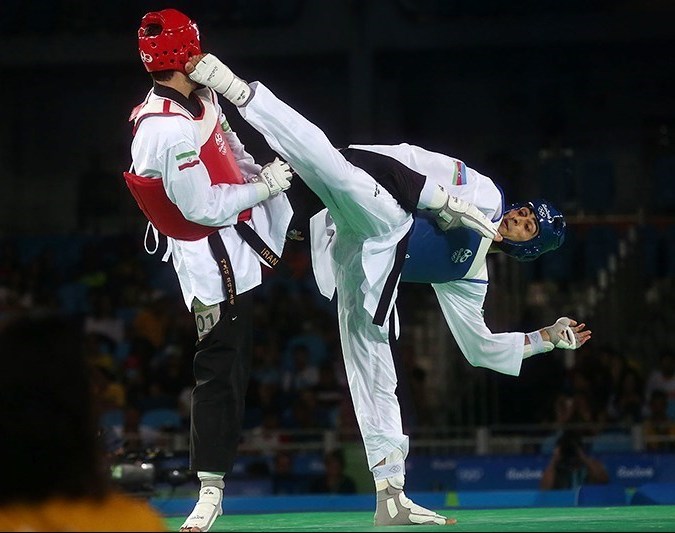
Olympic-style taekwondo competition is known as kyorugi, or sparring.
Athletes score using permitted kicks and punches while defending against their opponent’s attacks. Modern competition also uses electronic protective equipment to help register scoring techniques.
Watch Taekwondo
Elite taekwondo is fast, tactical and highly athletic. Competitors constantly adjust distance, change stance, fake attacks and look for openings.
For major international competition:
Olympic Taekwondo
https://www.olympics.com/en/sports/taekwondo/
World Taekwondo
https://www.worldtaekwondo.org/
USA Taekwondo
https://www.usatkd.org/
By the Numbers
World Taekwondo was founded in 1973, initially bringing together representatives from 16 countries.
Taekwondo appeared as a demonstration event at the 1988 Seoul Olympic Games and Barcelona 1992 before becoming a full Olympic medal sport at Sydney 2000.
World Taekwondo has reported 212 Member National Associations, demonstrating the sport’s extensive international reach.
At Sydney 2000, athletes representing 18 nations earned taekwondo medals.
Taekwondo is no longer simply a Korean sport practiced internationally. It has become a genuinely global competitive system.
The Athlete Experience
Taekwondo requires:
- Explosive leg power
- Flexibility
- Balance
- Coordination
- Reaction speed
- Cardiovascular conditioning
- Core strength
- Spatial awareness
- Timing
- Tactical discipline
One of the sport’s most important skills is distance management.
Athletes must stay close enough to attack while avoiding exposing themselves to counters.
Elite competitors also require exceptional hip mobility, flexibility and lower-body explosiveness to deliver attacks quickly at different heights and angles.
How Taekwondo Competition Works
Olympic taekwondo matches are contested within designated weight categories.
Athletes typically wear:
- Head protection
- Trunk protector
- Forearm guards
- Shin guards
- Groin protection
- Gloves
- Mouthguard
- Electronic sensing equipment where required
Competitors score through legal kicks to permitted target areas and punches to the trunk.
Head kicks and difficult turning techniques can produce greater scoring opportunities, creating a balance between risk and reward.
Kyorugi vs. Poomsae
Kyorugi
Kyorugi is sparring.
Two athletes compete directly against each other, attacking and defending in real time. This is the discipline used in Olympic competition.
Poomsae
Poomsae involves predetermined sequences of techniques.
Athletes are evaluated on areas including:
- Precision
- Balance
- Technique
- Power
- Rhythm
- Control
Poomsae provides another major competitive pathway within taekwondo beyond head-to-head sparring.
Fan Appeal
Taekwondo’s greatest spectator advantage is its instant visual impact.
Spinning kicks, rapid counterattacks and head-level techniques can be appreciated even by viewers who don’t understand every rule.
Its strongest spectator qualities include:
- Speed
- Athleticism
- Explosive scoring moments
- Head-to-head competition
- Olympic visibility
One successful technique can quickly change a match.
The Global Footprint
Taekwondo has developed a significant organized presence across:
- Asia
- Europe
- North America
- South America
- Africa
- Oceania
- The Middle East
Its worldwide federation structure and Olympic medal distribution demonstrate that elite success extends well beyond Korea.
Taekwondo also has a relatively scalable facility model. Programs can operate in indoor training spaces without requiring expensive infrastructure such as ice rinks, swimming pools or large stadiums.
Where Is Taekwondo Growing?
Taekwondo already has a mature international base, but several areas provide additional growth opportunities.
Youth Competition
Martial arts schools provide a natural entry point for young athletes to develop movement, discipline and technique before competitive sparring.
Women’s Competition
Men and women compete at the highest international levels, including the Olympic Games.
Para Taekwondo
Para taekwondo made its Paralympic debut at Tokyo 2020, expanding the sport’s international competitive pathway.
United States Competition
USA Taekwondo operates national championships, ranking events, camps and athlete-development programs.
The pathway can extend from:
Local athlete → Regional competitor → National competitor → National team → International competition → Olympic Games
Youth & Development
Youth development is one of taekwondo’s strongest advantages.
Families may choose the sport for:
- Physical activity
- Confidence
- Coordination
- Discipline
- Focus
- Self-control
- Social interaction
- Goal setting
The belt system gives young participants clear progression.
Athletes learn skills, practice, test and advance through identifiable levels.
That structure can encourage long-term participation even for athletes who never pursue elite competition.
High School and College Opportunity
Taekwondo has a substantial youth and Olympic ecosystem but is not currently an NCAA championship sport.
American athletes therefore generally develop through clubs, academies, USA Taekwondo events and international competition rather than the traditional high-school-to-NCAA pipeline.
For athletes and parents, understanding that pathway early can be important when evaluating competitive opportunities.
The Business of Taekwondo
Taekwondo supports a worldwide participation economy that includes:
- Martial arts schools
- Independent instructors
- Training academies
- Tournament organizers
- National federations
- Equipment manufacturers
- Uniform manufacturers
- Camps
- Coaching education
- Referee education
- Belt testing
- Membership organizations
- Event venues
- Streaming and media
- Sports technology
The local martial arts school is a particularly important part of this ecosystem.
Individual schools may train hundreds or thousands of athletes over their lifetime. Replicated across cities and countries, those businesses create a substantial global participation market.
Equipment & Facilities
Athlete Equipment
Participants may need:
- Dobok
- Belt
- Headgear
- Chest protector
- Forearm guards
- Shin guards
- Gloves
- Foot protection
- Mouthguard
- Training targets
- Equipment bag
Competitive athletes may require equipment meeting specific governing-body standards.
Training Facilities
A taekwondo academy generally requires:
- Safe training flooring
- Open practice space
- Protective mats
- Kicking targets
- Training bags
- Equipment storage
Compared with many organized sports, the infrastructure requirement is relatively modest.
That makes taekwondo easier to establish in communities without specialized sports facilities.
Technology Is Changing Taekwondo
Electronic scoring systems are now an important part of elite competition.
Sensors incorporated into protective equipment help register scoring contact, while video review can assist officials during major events.
Technology has also affected strategy as athletes and coaches adapt techniques to modern scoring systems.
Taekwondo therefore combines traditional martial-arts foundations with electronic scoring, video review and modern sports science.
Global Sports Market Index: Taekwondo
Global Reach — 9.5/10
Extensive international organization and participation.
Youth Participation — 9.2/10
A strong worldwide martial-arts school ecosystem supports grassroots development.
Accessibility — 8.8/10
Participation does not require large teams or expensive specialized facilities.
Olympic Importance — 9.3/10
A full Olympic medal sport since Sydney 2000.
Fan Appeal — 8.2/10
Speed and spectacular kicking techniques create strong visual appeal.
Commercial Ecosystem — 8.4/10
Schools, equipment, events, memberships and instruction support a broad participation economy.
Professional Opportunity — 6.8/10
Professional earning opportunities remain more limited than in major commercial sports.
Growth Potential — 8.9/10
Youth participation, Olympic exposure, Para sport and technology provide continued growth opportunities.
Global Sports Market Intelligence Rating
8.7 / 10
Taekwondo combines several characteristics that are difficult for a sport to build:
- Global participation
- Strong youth infrastructure
- National governing bodies
- International competition
- Olympic status
- Equipment and training businesses
- Relatively accessible facilities
Its primary weakness is a smaller professional-athlete economy compared with major commercial sports.
But taekwondo’s economic strength is largely built around participation rather than spectatorship.
Did You Know?
Taekwondo first appeared at the Olympics in Korea.
It was a demonstration event at the 1988 Seoul Games.
It wasn’t immediately a medal sport.
Taekwondo returned as a demonstration sport at Barcelona 1992 before becoming a full medal sport at Sydney 2000.
Olympic taekwondo is relatively young.
Its first official Olympic medals were awarded in 2000.
Para taekwondo is now a Paralympic sport.
It made its Paralympic debut at Tokyo 2020.
Taekwondo has a huge international footprint.
World Taekwondo has reported 212 Member National Associations.
Explore Taekwondo
World Taekwondo
International governing body for Olympic taekwondo.
Olympic Taekwondo
Official Olympic sport information, athletes, results and competition coverage.
USA Taekwondo
National governing body for competitive taekwondo in the United States.
Kukkiwon
World Taekwondo Headquarters.
European Taekwondo Union
Asian Taekwondo Union
Pan American Taekwondo Union
Final Thoughts
Taekwondo has successfully grown from its Korean roots into a worldwide participation and Olympic sport.
Its combination of athleticism, youth accessibility, international organization and relatively modest facility requirements gives it a strong foundation for continued growth.
For most athletes, the journey won’t begin at an Olympic training center.
It will begin at a local taekwondo school.
That grassroots network may ultimately be the sport’s greatest strength.
Continue Your Global Sports Discovery Journey
Continue exploring Olympic and international sports on theGLOBALSPORTSMARKET.com.
🥋 Judo — Explore the Olympic martial art built around throws, grappling, leverage and control.
🏹 Archery — Discover one of the world’s oldest skills transformed into a precision Olympic sport.
🏸 Badminton — Explore the incredibly fast racket sport with an enormous international following.
🤸 Artistic Gymnastics — Artistic Gymnastics Explained: The Global Sport of Strength, Precision and Fearless Skill
⛸️ Figure Skating — Explore an Olympic sport where athletic ability meets technical precision and performance.
theGLOBALSPORTSMARKET.com is a digital sports intelligence platform published by KODA8, LLC, exploring the sports, organizations, athletes, events, businesses and opportunities shaping the global sports economy.

Author: Howie
We are building a network of digital resources designed to bring some much-needed order to the internet's most chaotic corners. I don't just collect domains; I build them into authoritative hubs for the topics I’m passionate about.