



Global Sports Market Intelligence Report
Sport: Figure Skating
Primary Category: Winter Sports
Market Stage: Established Global Sport
Global Sports Market Intelligence Rating: 9.1/10
Olympic Status: Olympic Winter Sport
International Governing Body: International Skating Union (ISU)
- Global Sports Market Intelligence Report
- Did You Know?
- Technical Development
- Physical Development
- Artistic Development
- Mental Development
- Global Sports Market Intelligence Rating: 9.1/10
- International Governance
- National Governing Bodies
- Olympic Winter Games
- ISU World Figure Skating Championships
- ISU Grand Prix of Figure Skating
- ISU European Figure Skating Championships
- ISU Four Continents Figure Skating Championships
- ISU World Junior Figure Skating Championships
- ISU World Synchronized Skating Championships
- North America
- Europe
- Japan
- China and South Korea
- Emerging Asian Markets
- Overall Global Sports Market Intelligence Rating
- Editorial Verdict
- International Skating Union
- ISU Figure Skating
- Olympics.com
- U.S. Figure Skating
- Learn to Skate USA
- U.S. Figure Skating Club Finder
- Skate Canada
- Jackson Ultima
- Edea
- Riedell Skates
- Explore Ice Hockey
- Explore Alpine Skiing
- Discover Sepak Takraw
- Published By
A Sport That Makes the Impossible Look Beautiful
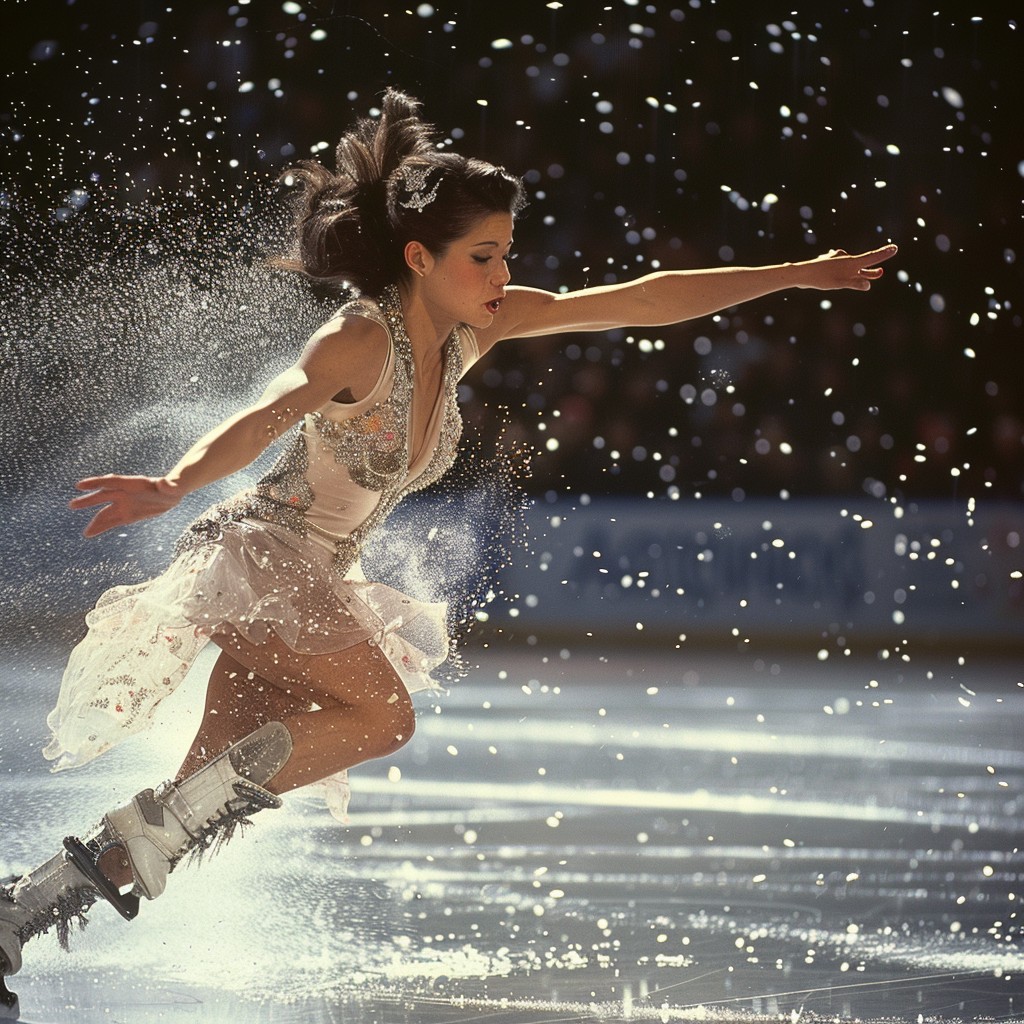
There is a moment in figure skating when the athlete leaves the ice.
For a fraction of a second, everything changes.
The skater who was accelerating across the rink is suddenly airborne, rotating at extraordinary speed before returning to the ice on a narrow steel blade.
Then the music continues.
There is no timeout.
No celebration.
No opportunity to reset.
The skater flows directly into the next movement as though nothing remarkable just happened.
That is figure skating.
It asks athletes to combine explosive power, balance, speed, flexibility, precision and courage with something most sports never require:
Make it beautiful.
That combination has made figure skating one of the signature sports of the Olympic Winter Games and one of the most recognizable winter sports in the world.
But Olympic performances represent only the top of a much larger ecosystem.
Behind every international champion are ice rinks, skating clubs, coaches, choreographers, equipment manufacturers, learn-to-skate programs, competitions, volunteers, families and thousands of recreational athletes simply trying to master their next skill.
The International Skating Union now represents more than 100 members across nearly 80 countries and stages more than 40 international competitions each season.
Figure skating is therefore much more than an Olympic spectacle.
It is a global sports market built around one of the most unusual combinations in sport:
athleticism and artistry on ice.
Did You Know?
Figure skating became an Olympic sport before the Olympic Winter Games existed.
It appeared at the 1908 Olympic Games in London and again at Antwerp 1920 before joining the first Olympic Winter Games at Chamonix in 1924. The International Skating Union itself dates to 1892.
Figure Skating By the Numbers
| Measure | Global Sports Market View |
|---|---|
| International governing body | International Skating Union |
| ISU founded | 1892 |
| First World Figure Skating Championships | 1896 |
| First Olympic appearance | London 1908 |
| Winter Olympic program | Since Chamonix 1924 |
| Core disciplines | Men’s Singles, Women’s Singles, Pair Skating, Ice Dance |
| Team discipline | Synchronized Skating |
| ISU international footprint | 100+ members across nearly 80 countries |
| U.S. Learn to Skate network | 1,000+ programs |
| U.S. Figure Skating membership | 184,000+ |
| Skate Canada membership | 210,000+ |
| Skate Canada clubs and schools | 1,000+ |
| Major future catalyst | Synchro9 Olympic debut at Alpes 2030 |
The numbers reveal something easy to miss when watching an Olympic final.
Figure skating has a substantial participation and development infrastructure beneath the elite level. U.S. Figure Skating reports more than 184,000 members and more than 1,000 registered Learn to Skate USA programs, while Skate Canada reports more than 210,000 members, 6,700 certified coaches and over 1,000 clubs and skating schools.
Watch Figure Skating in Action
Figure skating is one of those sports that must be seen to be fully understood.
Television can make elite skating appear smooth and controlled.
Watch closely and the athletic demands become clearer.
The speed entering a jump.
The height.
The rotation.
The force of the landing.
The edge control through turns.
The synchronization between partners.
The precision of a spin.
And then there is the performance itself.
Start with the International Skating Union for international competitions, results, athlete information and official skating coverage.
For the Olympic side of the sport, Olympics.com provides competition coverage, athlete stories, results and Olympic history.
Those two resources provide an excellent introduction to what elite figure skating actually looks like.
What Is Figure Skating?
Figure skating is a competitive ice sport combining skating technique with jumps, spins, footwork, lifts, choreography and musical interpretation.
The major international disciplines are:
Men’s Singles
Individual athletes perform programs combining jumps, spins, step sequences, skating skills and choreography.
Women’s Singles
Athletes compete through technically demanding programs where jumping ability, spins, skating quality and presentation all contribute to the final result.
Pair Skating
Two athletes combine individual skating with throws, lifts, side-by-side jumps, spins and other partnered elements.
Ice Dance
Teams emphasize edges, footwork, timing, partner coordination, musical interpretation, skating skills and intricate lifts.
Synchronized Skating
Teams perform formations and technical elements together, adding a completely different dimension to skating through precision, speed and coordinated movement.
What makes all of these disciplines distinctive is that technical execution alone is not enough.
Skaters must also present a coherent performance.
That tension between measurable difficulty and human expression is central to figure skating’s identity.
The Blade Changes Everything
Many sports happen on a playing surface.
Figure skating is built around an athlete’s relationship with that surface.
The steel blade beneath a figure skate contains edges that allow skaters to carve curves, accelerate, change direction, spin and control their movement across the ice.
Elite skating therefore begins with fundamentals long before an athlete attempts spectacular jumps.
Skaters develop:
- Balance
- Edge control
- Power
- Glide
- Turns
- Footwork
- Coordination
- Body position
- Spatial awareness
The better the skater becomes, the less obvious those skills appear.
That creates an interesting divide between casual and experienced spectators.
A new fan may watch the jumps.
Someone who understands skating begins watching what happens between them.
Why Figure Skating Connects With People
Figure skating occupies an unusual position in global sport because people can appreciate it without completely understanding its rules.
A spectacular jump looks spectacular.
A beautifully synchronized pair looks impressive.
An emotional program can connect with an audience even if the viewer cannot identify every technical element.
That makes figure skating highly discoverable.
Some people arrive through the Olympics.
Others discover an athlete through social media.
Some attend an ice show.
Some grow up near a rink.
Others take their children to beginner skating lessons and discover an entire sports community they never knew existed.
And participation does not have to mean chasing an Olympic medal.
Someone can become:
- A recreational skater
- A competitive skater
- An adult skater
- An ice dancer
- A synchronized skater
- A coach
- An official
- A volunteer
- A skating parent
- A lifelong fan
That matters.
Strong sports ecosystems give people multiple ways to belong.
How Figure Skaters Become Great
There is no shortcut to elite figure skating.
Athletes generally begin with basic skating skills and gradually progress into more specialized training.
Eventually, development becomes highly technical.
Technical Development
Competitive skaters spend years developing jumps, spins, turns, transitions, footwork and skating skills.
Tiny changes in timing or body position can determine whether a difficult element succeeds.
Repetition matters enormously.
But so does precision.
Physical Development
Figure skating requires a rare athletic combination:
- Explosive leg power
- Core strength
- Balance
- Flexibility
- Coordination
- Cardiovascular fitness
- Rotational speed
- Landing stability
The physical demands become increasingly significant as jump difficulty increases.
Artistic Development
Elite skaters must also develop skills that would seem more familiar in dance or performance.
They work on:
- Musical interpretation
- Choreography
- Movement quality
- Body lines
- Expression
- Performance
A technically difficult program that feels disconnected from its music is different from a program where athletic elements and choreography become one performance.
Mental Development
Perhaps the least visible challenge is psychological.
A skater can spend months preparing a program that lasts only minutes.
Competition offers little room for error.
When the music starts, the athlete owns the performance.
That pressure is part of what makes elite skating so compelling.
From the Local Rink to the World Stage
Every Olympic figure skater once had to learn how to stand on the ice.
That makes grassroots skating one of the most important parts of the sport.
In the United States, Learn to Skate USA provides a standardized introduction to skating for children and adults.
More than 1,000 programs operate nationwide, with pathways designed for preschoolers, children, adults and skaters with disabilities. Once participants learn the fundamentals, they can progress toward more specialized skating disciplines.
That entry point feeds a larger ecosystem.
U.S. Figure Skating supports affiliated clubs, competitions, athlete development and skating programs around the country. Its club network provides testing, competitions, exhibitions, ice shows and other community programming.
Canada has similarly deep infrastructure.
Skate Canada operates through more than 1,000 clubs and skating schools supported by more than 6,700 certified coaches.
These numbers reinforce one of the fundamental realities of figure skating.
Olympic medals create inspiration. Local rinks create skaters.
Figure Skating Can Be a Lifelong Sport
One of figure skating’s underappreciated strengths is that participation does not have to end when an athlete’s elite ambitions end.
Adults can learn to skate.
Former competitors can continue skating.
Athletes can move into coaching.
Skaters can participate in synchronized skating, ice dance, exhibitions or adult competition.
Parents become volunteers.
Experienced skaters become officials.
This matters because sustainable sports ecosystems are not built entirely around identifying elite athletes.
They are built by keeping people connected.
Learn to Skate USA specifically offers adult pathways as part of its standardized curriculum.
That means someone discovering figure skating at 35, 45 or 55 does not have to remain only a spectator.
They can get on the ice.
More Than a Century of Global Competition
Organized international figure skating predates almost every institution associated with modern winter sport.
The International Skating Union was founded in 1892 and describes itself as the oldest international federation in winter sports.
The first World Figure Skating Championships followed in St. Petersburg in 1896.
Women’s international championship competition and pair skating developed soon afterward.
Then figure skating achieved a remarkable distinction.
At London 1908, it became the first winter sport included in the Olympic Games.
Figure skating returned at Antwerp 1920 and became part of the first Olympic Winter Games at Chamonix in 1924.
That history explains part of the sport’s stature.
Figure skating did not simply join the Winter Olympic tradition.
It helped create it.
Global Growth Analysis
Global Sports Market Intelligence Rating: 9.1/10
Figure skating is already a mature international sport.
Its next opportunity is not simply geographic expansion.
It is expanding access, participation and audience engagement.
Traditional strength remains concentrated across North America, Europe and parts of Asia.
The United States and Canada possess extensive club and coaching networks.
European countries remain deeply connected to the sport’s competitive history.
Japan has developed an exceptionally engaged figure-skating audience.
China and South Korea have produced world-class athletes and hosted major international competitions.
But digital distribution is changing what a “figure skating market” can look like.
A viewer no longer needs to live near an elite competition to discover skating.
A jump, lift, spin or synchronized sequence can reach millions of screens.
Figure skating’s greatest advantage in that environment is simple:
It is inherently visual.
You do not need a rulebook to recognize extraordinary movement.
The Olympic Effect
Few sports fit the Olympic television environment better than figure skating.
It combines:
- National representation
- Individual personalities
- Music
- Athletic risk
- Technical difficulty
- Visual beauty
- Human storytelling
- Medal pressure
That combination allows figure skating to reach beyond the traditional sports audience.
Someone who never watches skating during the regular competitive season may still know the sport’s biggest Olympic stars.
That creates an enormous awareness funnel.
The challenge comes after the Games.
Can the sport turn an inspired viewer into a regular fan?
Can it turn a curious child into a beginner skater?
Can a parent easily find the nearest legitimate program?
Can Olympic attention create lasting economic activity for local skating clubs and rinks?
Those are Global Sports Market questions.
And they lead directly to one of the most important developments in the sport’s future.
Synchro9 Changes the Olympic Opportunity
In July 2026, the IOC approved Synchro9 for the Olympic Winter Games Alpes 2030.
For synchronized skating, it is a historic breakthrough.
The new format uses teams of nine skaters and introduces a faster competition structure featuring knockout rounds and presentation designed to work well for live spectators, broadcasters and digital audiences.
Synchro9 is also scheduled for the Dolomiti Valtellina 2028 Winter Youth Olympic Games before making its senior Olympic debut in 2030.
From a sports-market perspective, this matters enormously.
It potentially creates:
- New Olympic athletes
- New national teams
- Additional sponsorship inventory
- More broadcast content
- New participation pathways
- Greater visibility for synchronized skating
- Stronger team identities within figure skating
- New markets where smaller team sizes are more practical
The global-development implications are already visible.
In August 2026, the ISU reported staging its first Synchro9 Development Camp in Bangkok, bringing together junior athletes, coaches and officials from across Asia. The ISU specifically identified the smaller team format as one way of reducing barriers in markets where athlete pools, ice time or financial resources are limited.
That is exactly the type of innovation mature sports need.
Figure skating is protecting its tradition while creating new ways to grow.
The Business of Figure Skating
Figure skating’s economic ecosystem stretches far beyond competition.
Every skater needs somewhere to skate.
Many need coaching.
Competitive skaters need specialized equipment.
Events require facilities, officials, technology and organizers.
Programs require instructors.
Elite athletes may work with choreographers, trainers, medical professionals and performance specialists.
That creates an interconnected sports economy.
International Governance
International Skating Union
The worldwide governing body for figure skating, synchronized skating, speed skating and short track. The ISU oversees international competition, technical regulations and the global development of skating.
National Governing Bodies
U.S. Figure Skating
The national governing body for figure skating in the United States, supporting athletes, clubs, coaches, officials, competitions and participation pathways.
Skate Canada
One of the world’s largest skating organizations, operating a substantial grassroots-to-high-performance network across Canada.
Ice Rinks Are the Infrastructure Behind the Sport
Figure skating cannot grow without ice.
That sounds obvious, but economically it is fundamental.
Soccer needs fields.
Basketball needs courts.
Figure skating requires specialized refrigerated facilities that are expensive to build and operate.
Those facilities can become community sports hubs supporting:
- Public skating
- Learn-to-skate programs
- Figure skating
- Ice hockey
- Private lessons
- Competitions
- Camps
- Clinics
- Ice shows
- Adult skating
- Equipment services
The rink therefore sits at the center of the local skating economy.
It is also one of figure skating’s biggest barriers.
Where ice time is scarce, expensive or geographically distant, participation becomes harder.
That makes rink access one of the most important growth issues in global skating.
The Figure Skating Equipment Market
The figure skate itself is highly specialized.
Boot stiffness, fit, blade design, blade positioning and sharpening can all affect performance.
The equipment ecosystem also includes apparel, costumes, training accessories, protective products and maintenance services.
Several major brands have developed deep positions within skating.
Jackson Ultima
A major figure-skating equipment company producing boots and blades for athletes ranging from recreational beginners to high-level competitors.
Edea
The Italian skating-boot manufacturer has become highly visible within international competitive skating.
Riedell Skates
A long-established American skating company producing equipment for figure skating and other skating disciplines.
And then there is the service layer.
Boot fitting matters.
Blade mounting matters.
Sharpening matters.
Maintenance matters.
That creates specialist retailers and technicians around skating communities.
In figure skating, equipment isn’t simply what an athlete wears.
It becomes part of the performance system.
Coaching Is an Economy of Its Own
As competitive athletes advance, their support teams can become surprisingly sophisticated.
A high-level skater may work with:
- Primary skating coaches
- Jump specialists
- Spin specialists
- Choreographers
- Dance instructors
- Strength coaches
- Conditioning specialists
- Sports medicine professionals
- Mental-performance specialists
That makes coaching and athlete services a significant part of the figure-skating economy.
It also makes local coaching quality crucial to development.
A great rink without strong instruction has limitations.
A strong skating community usually has both.
The Cost Challenge
Figure skating’s specialized ecosystem creates economic opportunity.
It also creates the sport’s biggest structural weakness.
Competitive families may face expenses for:
- Ice time
- Coaching
- Skates
- Blades
- Sharpening
- Competition fees
- Travel
- Costumes
- Choreography
- Club membership
- Off-ice training
Those expenses can rise considerably as athletes progress.
That creates an accessibility challenge.
The future of figure skating cannot depend solely on convincing more people that the sport is beautiful.
It must also create practical ways for more people to participate.
Affordable beginner programs, public rinks, community skating initiatives and strong clubs therefore have enormous strategic value.
Learn to Skate USA’s national network illustrates how standardized entry-level programs can help create that bridge.
Media, Technology and the Digital Opportunity
Figure skating was made for television.
It may be even better suited to modern digital media.
A complete competition can be complicated for a new viewer.
A spectacular 15-second skating moment is not.
That makes skating highly compatible with:
- YouTube
- Short-form video
- Athlete social media
- Streaming
- Highlight packages
- Behind-the-scenes training content
- Technical analysis
Technology also increasingly shapes athlete development and competition through video analysis, performance review and detailed technical evaluation.
Synchro9 takes this media evolution a step further.
The ISU explicitly designed the format to be faster, more visually immediate and better adapted to broadcast and digital platforms.
That suggests an important shift.
Figure skating’s next generation of fans may not discover the sport through a two-hour television broadcast.
They may discover it through one extraordinary moment on a phone.
Major Figure Skating Competitions
Olympic Winter Games
The sport’s largest global showcase and the competition capable of turning elite skaters into internationally recognized athletes.
ISU World Figure Skating Championships
The flagship annual global championship for elite figure skating.
ISU Grand Prix of Figure Skating
A premier international competition series featuring many of the world’s best skaters and culminating in the Grand Prix Final.
ISU European Figure Skating Championships
One of figure skating’s most historic continental competitions.
ISU Four Continents Figure Skating Championships
A major international championship for eligible skaters representing nations outside Europe.
ISU World Junior Figure Skating Championships
A critical international stage for emerging elite athletes.
ISU World Synchronized Skating Championships
The leading global championship for synchronized skating and an increasingly important part of figure skating’s broader international ecosystem.
Where Figure Skating Is Strong
North America
The United States and Canada combine extensive rink infrastructure, coaching systems, clubs and generations of Olympic tradition.
Their grassroots systems remain among the strongest assets in global skating.
Europe
Figure skating’s international competitive roots are European.
The continent continues to host major competitions and support established skating federations, clubs and athlete-development systems.
Japan
Japan has demonstrated the commercial potential of a deeply engaged figure-skating fan base.
Elite skaters can become major public figures, while competitions and skating events attract knowledgeable audiences.
China and South Korea
Olympic investment, elite athletes and international events have increased figure skating’s visibility across both markets.
Emerging Asian Markets
The development of Synchro9 could become particularly interesting here.
The ISU’s 2026 development camp in Thailand included athletes, coaches and officials from across Asia and was specifically intended to expand access in regions where ice and athlete resources can be limited.
That is worth watching.
Find Figure Skating Near You
Reading about figure skating should not be the end of the journey.
For someone interested in trying the sport, the next question is much more practical:
Where can I skate?
United States
Learn to Skate USA offers introductory programs across the country.
Its Program Finder helps prospective skaters locate beginner instruction. More than 1,000 programs operate nationwide.
U.S. Figure Skating also provides a Figure Skating Club Finder with geolocation and mapping tools for locating affiliated clubs.
Canada
Skate Canada connects skaters with its nationwide system of clubs, skating schools and programs.
International
Start with the International Skating Union to understand the global federation structure and find national skating organizations.
From Global Discovery to Local Participation
This is where figure skating becomes particularly relevant to the future of theGLOBALSPORTSMARKET.com.
Someone may arrive because they watched an Olympic performance.
Then curiosity changes.
Where is the nearest rink?
Can my child learn?
Are there adult lessons?
Is there a skating club nearby?
Are there competitions we can attend?
Where can we find a camp?
Who coaches locally?
Those are no longer editorial questions.
They are discovery questions.
The Global Sports Directory is designed to create that next layer by connecting people with:
- Ice rinks
- Figure-skating clubs
- Skating schools
- Learn-to-skate programs
- Coaches
- Camps
- Clinics
- Competitions
- Events
- Organizations
That turns sports content into something more useful.
Discover → Understand → Care → Find → Participate.
Figure skating is almost a perfect example of why that journey matters.
What Is the Future of Figure Skating?
Figure skating does not need to reinvent itself.
It needs to make itself easier to discover and easier to enter.
Its foundation is already exceptional.
The sport has:
- More than a century of international history
- Olympic prestige
- Recognizable athletes
- Strong national federations
- Major international competitions
- Grassroots programs
- Adult participation
- Specialized equipment businesses
- Coaching economies
- Spectacular visual content
- Global digital potential
And now it has another major catalyst.
Synchro9 arrives at the Olympic Winter Games in 2030.
That creates a new chapter built around teams, entertainment, accessibility and modern presentation.
The biggest long-term challenge remains participation cost and ice access.
If figure skating can improve those two areas while using Olympic visibility and digital media to attract new audiences, its global sports market remains remarkably strong.
Global Sports Market Index
| Factor | Score | Global Sports Market View |
| Global Recognition | 9.5/10 | One of the world’s most recognizable winter sports |
| Olympic Importance | 10.0/10 | A foundational and signature Winter Olympic sport |
| Participation Potential | 8.4/10 | Strong pathways, constrained by cost and rink availability |
| Youth Development | 9.0/10 | Mature learn-to-skate, club and coaching infrastructure |
| International Reach | 9.2/10 | Strong across North America, Europe and Asia |
| Spectator Appeal | 9.5/10 | Exceptional combination of risk, beauty and athleticism |
| Commercial Ecosystem | 8.8/10 | Rinks, coaching, equipment, events and services create depth |
| Digital / Media Potential | 9.5/10 | Visually spectacular and ideal for short-form discovery |
| Accessibility | 7.4/10 | Specialized facilities and participation costs remain barriers |
| Long-Term Growth Opportunity | 9.3/10 | Olympic strength, digital reach and Synchro9 provide catalysts |
Overall Global Sports Market Intelligence Rating
9.1 / 10 — Global Sports Powerhouse
Figure skating combines international recognition, Olympic prestige, mature competition infrastructure and exceptional audience appeal.
Its biggest limitation is not whether people will watch.
It is whether enough people can easily access the ice.
Final Thoughts
The more you understand figure skating, the more impressive it becomes.
At first you notice the jumps.
Then you notice the speed required to create them.
You begin watching the edges.
The transitions.
The footwork.
The control.
The way partners move together.
The way athletes interpret music while simultaneously managing enormous technical difficulty.
Eventually, what looked effortless becomes recognizable for what it actually is.
Extraordinarily difficult.
And that may be the greatest achievement of figure skating.
Its best athletes make elite athletic performance look like art.
A child can watch that performance at the Olympic Games and be inspired.
Then, somewhere thousands of miles away, that same child can walk into a local ice rink, lace up a pair of skates and attempt the first glide.
The distance between those two moments is enormous.
But they belong to the same sport.
Global Sports Market Verdict
Market Position: Established Global Olympic Sport
Accessibility: Moderate — strong beginner pathways but significant facility and cost barriers
International Reach: Excellent
Commercial Ecosystem: Strong and specialized
Olympic Value: Exceptional
Digital Discovery Potential: Exceptional
Growth Opportunity: Strong
Discovery Value: 9.5/10
Editorial Verdict
Figure skating possesses something sports organizations spend enormous amounts of money trying to create:
an identity people instantly understand.
Ice.
Music.
Movement.
Athleticism.
Artistry.
Olympic pressure.
Few sports combine those ingredients.
Even fewer have been doing it on the international stage for more than a century.
But the most interesting opportunity may still lie ahead.
Digital media can introduce skating to audiences far beyond traditional winter-sport markets.
Synchro9 can expand the team side of the sport and bring synchronized skating onto the Olympic stage.
Local discovery tools can make it easier for inspired fans to find rinks and programs.
And grassroots skating can turn Olympic fascination into lifelong participation.
That is why figure skating matters.
It is not simply a beautiful sport to watch every four years.
It is a global sports ecosystem where athleticism meets artistry — and where one extraordinary performance can inspire someone else to step onto the ice.
Explore Figure Skating
International Skating Union
The global governing body for figure skating and synchronized skating. Explore international competitions, athletes, results, rules and global development.
ISU Figure Skating
Follow international figure-skating news, championships, competition information and athlete developments.
Olympics.com
Explore Olympic figure skating, athlete stories, results and the sport’s Olympic history.
U.S. Figure Skating
The national governing body supporting figure skating participation, clubs, athletes, coaches and competition in the United States.
Learn to Skate USA
One of the largest introductory skating systems in the world, providing standardized beginner instruction through more than 1,000 U.S. programs.
U.S. Figure Skating Club Finder
A practical resource for finding affiliated figure-skating clubs and local skating communities.
Skate Canada
Canada’s national skating organization, supporting more than 210,000 members through over 1,000 clubs and skating schools.
Jackson Ultima
A major global figure-skating equipment manufacturer producing specialized boots and blades.
Edea
Italian manufacturer of specialized figure-skating boots widely represented in high-performance competition.
Riedell Skates
Long-established American manufacturer serving recreational and competitive skating markets.
Continue Your Global Sports Discovery Journey
Figure skating belongs to a much larger world of sports built around ice, snow, movement, precision and extraordinary athletic skill.
Explore Ice Hockey
Move from artistry on ice to one of the fastest team sports in the world and explore ice hockey’s global development system, professional ecosystem and international reach.
Explore Alpine Skiing
Discover another signature Winter Olympic sport where technique, specialized equipment, infrastructure and speed combine to create a major international sports market.
Discover Sepak Takraw
Trade the ice for a court and discover another sport where extraordinary aerial athleticism can make physically difficult movement look almost impossible.
Continue Your Global Sports Discovery Journey
The world of sports is far larger than the games most of us grew up watching.
Every country, community and culture has sports worth discovering.
At theGLOBALSPORTSMARKET.com, we are building a global sports intelligence and discovery platform designed to help athletes, parents, families, coaches, fans and sports-industry professionals understand that world — and then find ways to become part of it.
Discover the sport. Understand the ecosystem. Find where it happens. Participate.
Continue exploring Global Sports Market Intelligence Reports at theGLOBALSPORTSMARKET.com and discover your next sport.
Published By
theGLOBALSPORTSMARKET.com
A KODA8, LLC Property
Powered by theGLOBALMARKET.ai
Helping sports fans discover, understand and appreciate the incredible world of sports.

Author: Howie
We are building a network of digital resources designed to bring some much-needed order to the internet's most chaotic corners. I don't just collect domains; I build them into authoritative hubs for the topics I’m passionate about.