
Global Sports Market Intelligence Report
Sport: Judo
Primary Category: Combat Sports
Market Stage: Established Global Sport
Global Sports Market Intelligence Rating: 9.0/10
Olympic Status: Summer Olympic Sport
International Governing Body: International Judo Federation
- Global Sports Market Intelligence Report
- Did You Know?
- Japan
- Europe
- The Americas
- Asia
- Olympic Games
- IJF World Judo Championships
- IJF World Judo Tour
- European Judo Championships
- All Japan Judo Championships
- Overall Global Sports Market Intelligence Rating
- International Judo Federation
- IJF Competition Calendar
- IJF Rules and Regulations
- Kodokan Judo Institute
- All Japan Judo Federation
- USA Judo
- USA Judo Club Finder
- United States Judo Federation Club Directory
- United States Judo Association Club Finder
- European Judo Union
- Olympics
- Editorial Verdict
- Explore MMA
- Discover Sepak Takraw
- Explore Artistic Gymnastics
- Explore Figure Skating
There is something almost counterintuitive about judo.
Two athletes stand just feet apart.
There are no punches.
No kicks.
No bats, sticks, rackets or balls.
For stretches of a match, someone unfamiliar with the sport might wonder whether much is happening at all.
Then everything changes.
A grip shifts.
A foot moves.
One athlete turns.
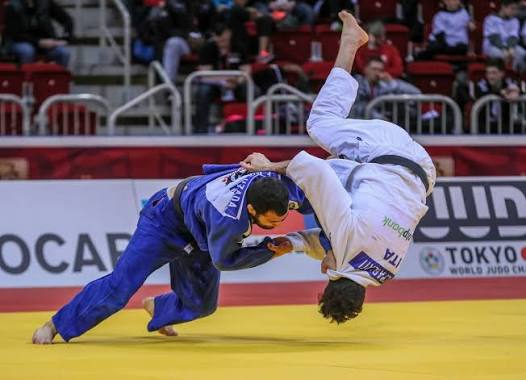
And suddenly a human being is flying through the air.
That explosion is part of what makes judo fascinating.
But judo is not simply about throwing another person onto a mat.
It is a sport built around balance, leverage, timing, movement, discipline and decision-making.
A smaller athlete who understands positioning can defeat a stronger opponent.
A competitor who attacks too aggressively can create the opening that defeats them.
And a contest that appears quiet can change completely in a fraction of a second.
Created in Japan by Jigoro Kano in 1882, judo grew from a martial art and educational system into one of the world’s most established international combat sports. It entered the Olympic Games at Tokyo 1964, and today the International Judo Federation brings together more than 200 national federations across five continental unions.
That makes judo much more than a Japanese martial art.
It is a truly global sport.
And for athletes and families discovering it for the first time, judo offers something increasingly valuable:
A sport where physical development and competitive intensity exist alongside an unusually strong culture of respect.
Did You Know?
The word judo is commonly translated as “the gentle way.”
That description can seem strange the first time you watch an elite athlete launch an opponent onto the mat.
But the philosophy makes sense.
Judo emphasizes using technique, timing, balance and an opponent’s movement rather than relying entirely on brute strength.
Its founder, Jigoro Kano, developed judo not merely as a system of fighting but as a method of physical, intellectual and moral education.
The original Kodokan was established in Tokyo in 1882 and remains one of the most important institutions in the sport today.
Judo By the Numbers
| Measure | Global Sports Market View |
|---|---|
| Founded | 1882 |
| Founder | Jigoro Kano |
| Birthplace | Japan |
| International governing body | International Judo Federation |
| IJF founded | 1951 |
| IJF footprint | 200+ national federations |
| Continental unions | 5 |
| First World Championships | 1956 |
| Olympic debut | Tokyo 1964 |
| Women’s Olympic medal competition | Since Barcelona 1992 |
| Olympic individual weight divisions | 7 men’s + 7 women’s |
| U.S. club network | 500+ USA Judo clubs |
| Core skills | Throwing, grappling, pins, submissions, balance and movement |
Judo’s international footprint is one of its greatest strengths.
This is not a combat sport concentrated around one professional promotion or a handful of countries.
The sport has national federations, local clubs, continental championships, international tournaments, world championships and Olympic competition.
That structure creates a genuine pathway from a neighborhood dojo to the world’s largest sporting stage.
Watch Judo in Action
Judo is one of those sports that becomes much easier to understand once you watch elite athletes compete.
Start with the International Judo Federation.
The IJF provides international competition coverage, athlete profiles, rankings, results, videos and information from the World Judo Tour.
For Olympic competition and athlete stories, visit Olympics.com.
New viewers should watch for something beyond the spectacular throws.
Watch the athletes’ hands.
Watch their feet.
Watch how they fight for grips.
Watch one competitor attempt to move the other’s weight.
Watch how quickly an apparent stalemate becomes an attack.
Once you begin seeing those battles, judo looks completely different.
What Is Judo?
Judo is a competitive grappling sport in which athletes attempt to defeat an opponent through controlled throwing and groundwork techniques.
Competitors wear a heavy uniform called a judogi and compete on a matted area called a tatami.
The standing portion of judo is known as tachi-waza.
This is where athletes fight for position and attempt throws.
Ground fighting is known as ne-waza.
Once a contest reaches the mat, athletes may use permitted techniques to control or submit an opponent.
The objective is not simply to overpower someone.
Successful judo requires athletes to understand:
- Balance
- Leverage
- Grip control
- Timing
- Footwork
- Body position
- Momentum
- Distance
- Reaction
- Strategy
That is why judo can be so compelling.
Every attack contains risk.
Every movement can create an opportunity.
Understanding Ippon
For a new spectator, there is one word worth learning immediately:
Ippon.
An ippon ends the contest.
The most dramatic version occurs when an athlete executes a successful throw meeting the required scoring criteria.
A match can therefore end almost instantly.
That creates one of judo’s greatest spectator qualities.
You cannot completely relax.
A competitor who appears to be struggling can suddenly execute the decisive technique.
A single opening can end everything.
Judo also includes other scoring and penalty situations, and its competition rules continue to evolve. The International Judo Federation maintains the current official Sport and Organisation Rules and competition regulations.
For someone just discovering judo, however, the basic concept is simple:
Create control. Create imbalance. Execute the technique.
The Grip Fight Before the Throw
Some of the most important action in judo happens before the spectacular part.
Athletes fight to establish advantageous grips on the opponent’s judogi.
That battle can determine:
- Who controls distance
- Who controls posture
- Which attacks become available
- Which direction an opponent can move
- Whether an athlete can initiate their preferred technique
This is one reason elite judo can look very different after you understand it.
At first, you watch the throws.
Eventually, you start watching what created the throw.
The gripping.
The movement.
The foot placement.
The reaction.
The setup.
The throw becomes the conclusion of a sequence that may have started several seconds earlier.
The Athlete Experience
Judo develops an unusual combination of physical skills.
Athletes need:
Explosive Power
Throws often require sudden acceleration and force.
Balance
A judoka must maintain their own balance while disrupting someone else’s.
Coordination
Hands, hips, legs and feet must work together.
Core Strength
Control of the torso is fundamental during both standing and ground exchanges.
Grip Strength
Controlling the judogi becomes an important part of competitive judo.
Mobility
Athletes constantly change angles, direction and body position.
Conditioning
High-intensity exchanges can be physically exhausting.
Body Awareness
Perhaps most importantly, judo teaches athletes how bodies move.
Where is the opponent’s weight?
Which foot is loaded?
Which direction are they moving?
Where is their center of gravity?
Those questions are constantly being answered through movement.
Learning How to Fall May Be One of Judo’s Most Valuable Skills
Before young judoka become great throwers, they learn something else:
How to fall.
Judo training includes ukemi, or breakfall techniques.
Athletes learn how to land safely and distribute the force of a fall rather than instinctively reacting in ways that could increase injury risk.
It is fundamental to practicing the sport.
It also reflects an important part of judo’s culture.
Progression matters.
Technique matters.
Learning how to receive a technique safely matters just as much as learning how to execute one.
For parents evaluating youth programs, that emphasis on fundamentals is worth understanding.
A legitimate judo program should not simply throw inexperienced children into uncontrolled competition.
Development begins with learning how to move safely.
Why Judo Can Be Great for Young Athletes
Youth sports discussions often revolve around scholarships, rankings, travel teams and recruiting.
Judo offers a different starting point.
A child can walk into a dojo without needing an entire team.
They don’t need to already be tall.
They don’t need to throw 90 miles per hour.
They don’t need expensive ice time.
They don’t need eleven teammates to practice.
They begin by learning.
And judo can develop qualities that transfer far beyond the mat:
- Coordination
- Balance
- Strength
- Discipline
- Confidence
- Respect
- Persistence
- Body control
- Problem-solving
- Comfort under pressure
The belt system also gives young athletes visible markers of development.
Progress becomes something they can experience.
Learn.
Practice.
Improve.
Advance.
Then learn again.
Judo Is Competitive — But Respect Is Built Into the Sport
Judo can be intensely physical.
That should not be confused with hostility.
Respect is deeply embedded in the sport.
Competitors bow.
Training partners depend on one another.
Athletes learn techniques that could hurt another person if practiced irresponsibly, which means control matters.
A good dojo therefore teaches more than how to win.
It teaches athletes how to train with other people.
That distinction matters enormously in youth development.
The person standing across from you is simultaneously your opponent and one of the people helping you become better.
That is a powerful lesson.
Judo and the Olympic Games
Judo made its Olympic debut at the Tokyo 1964 Olympic Games.
The symbolism was enormous.
A martial art developed in Japan had become an international competitive sport showcased at the Olympics in Tokyo.
Women’s judo appeared as a demonstration sport at Seoul 1988 and became part of the Olympic medal program at Barcelona 1992.
Modern Olympic judo includes seven individual weight categories for men and seven for women.
That weight-class structure is fundamental to the sport.
Athletes compete against opponents of comparable size while technical differences determine the outcome.
Judo’s Olympic presence has also helped turn athletes from countries around the world into national sporting figures.
Japan remains central to the sport’s identity.
But elite judo belongs to far more than Japan.
Judo’s Global Footprint
Few sports demonstrate globalization as clearly as judo.
Its philosophical and technical roots remain unmistakably Japanese.
Its competitive map does not.
Japan
Japan remains judo’s spiritual home and one of its great competitive powers.
The Kodokan in Tokyo remains an essential institution, while the All Japan Judo Federation oversees a deep national ecosystem extending from youth and school competition through elite international athletes.
Europe
Europe has developed an enormous judo infrastructure.
The European Judo Union includes 51 member national federations and operates a substantial calendar of championships, competitions, education programs and development events.
Countries including France, Georgia, Azerbaijan, Kosovo and others have built significant judo traditions.
The Americas
Judo has long-established communities across North and South America.
Brazil has an especially deep martial-arts culture, while Cuba has produced generations of internationally successful judoka.
In the United States, USA Judo reports a network of more than 500 clubs nationwide.
Asia
Beyond Japan, countries throughout Asia participate at elite international levels.
South Korea, Mongolia, Uzbekistan and Kazakhstan are among the nations with significant competitive traditions.
Judo’s international strength comes from precisely this diversity.
There is no single path to becoming a judo nation.
Where Judo Is Growing
Judo already possesses global reach.
Its opportunity now is deeper participation.
That means turning international recognition into local accessibility.
The formula is straightforward:
More qualified coaches + more legitimate clubs + more youth participation + easier local discovery = stronger judo markets.
Unlike sports that require enormous purpose-built facilities, a judo club can operate in relatively modest indoor spaces.
A proper training area and mats are essential, but the infrastructure requirements are substantially different from building an ice rink, swimming complex or stadium.
That gives judo geographic flexibility.
Schools.
Community centers.
Martial-arts facilities.
Dedicated dojos.
Universities.
Recreation programs.
All can potentially support judo.
That matters when considering the sport’s long-term growth.
Judo in the United States
Judo occupies an interesting position in American sports.
Millions of Americans recognize the word.
Far fewer understand the competitive sport behind it.
That creates opportunity.
USA Judo is the national governing body recognized within the U.S. Olympic movement and provides national competition, athlete development, membership and club resources.
Its club locator gives families a practical starting point for finding sanctioned programs.
The United States Judo Federation also maintains a nationwide club network organized through regional judo associations.
The United States Judo Association provides another established network of clubs, coaches and competitors.
Those resources matter because martial arts can be confusing for parents.
A Google search may return dozens of businesses using words such as judo, jiu-jitsu, karate, MMA, grappling and self-defense.
They are not interchangeable.
Someone specifically interested in Olympic judo should look for a legitimate judo program with appropriately credentialed instructors and connections to established judo organizations.
Find Judo Near You
This is where sports discovery becomes practical.
If your child watches judo during the Olympics and says:
“I want to try that.”
What happens next?
In the United States, start with:
USA Judo
USA Judo offers a club locator for sanctioned clubs across the country.
United States Judo Federation
The USJF maintains an extensive directory of active judo clubs.
United States Judo Association
The USJA provides a searchable club finder by location.
Internationally, begin with the International Judo Federation, which connects the sport’s national federations around the world.
Then find the recognized federation in your country and work down toward regional organizations and local clubs.
That is a much better starting point than choosing a martial-arts program from an advertisement without understanding its credentials.
What Parents Should Look for in a Judo Club
A parent doesn’t need to understand every judo technique before evaluating a program.
Watch the environment.
Ask questions.
Look for:
- Qualified instructors
- Clear safety practices
- Clean training mats
- Age-appropriate instruction
- Structured progression
- Controlled sparring
- Respectful coaching
- Appropriate supervision
- Transparent membership and competition costs
- Connections to recognized judo organizations
And watch how the experienced athletes treat beginners.
That can tell you a great deal about the culture of a dojo.
A strong judo club should make a new athlete feel challenged without making them feel disposable.
Judo Can Be a Lifelong Sport
Not everyone who enters a dojo needs to become an Olympian.
That is one of judo’s strengths.
People can participate as:
- Youth athletes
- Competitive judoka
- Recreational practitioners
- Masters competitors
- Coaches
- Referees
- Club administrators
- Volunteers
- Parents
- Fans
Some competitors will chase national championships.
Some will pursue black belts.
Some will simply enjoy training twice a week.
Strong sports ecosystems allow all of those people to belong.
Judo does.
The Business of Judo
Judo is not a commercial giant on the scale of professional football, basketball or soccer.
Its economic ecosystem is different.
It is distributed across thousands of organizations and businesses.
That includes:
- Judo clubs
- Dojos
- Coaching
- Membership organizations
- Tournament organizers
- Training camps
- Equipment manufacturers
- Uniform suppliers
- Mat manufacturers
- Event venues
- Sports travel
- Referee education
- Athlete development
- Strength and conditioning
- Sports medicine
- Digital instruction
- Streaming and media
At the grassroots level, the club is the economic engine.
Families pay membership or training fees.
Athletes purchase judogi.
Competitors travel to tournaments.
Clubs rent or own facilities.
Events require mats, officials, registration systems and venues.
Successful athletes may eventually move into coaching and open programs of their own.
That creates a sports economy that is less visible than a billion-dollar professional league but remarkably durable.
Equipment and Facilities
Compared with many sports, the equipment list for judo is relatively short.
The essential piece is the judogi.
A judogi is specifically constructed to withstand the pulling and gripping that occurs during training and competition.
Competitive athletes may require approved uniforms meeting federation specifications.
Training also requires appropriate judo mats.
The surface matters because athletes repeatedly practice throws and falls.
A legitimate facility therefore needs enough properly installed mat space to allow athletes to train safely.
From a market-development perspective, this is an advantage.
Judo doesn’t require:
- A swimming pool
- An ice rink
- A golf course
- A baseball diamond
- A large stadium
That lowers one of the barriers to geographic expansion.
The Dojo Is Judo’s Most Important Piece of Infrastructure
Every sport has a place where its culture lives.
Baseball has the ballpark.
Basketball has the gym.
Hockey has the rink.
Judo has the dojo.
A good dojo becomes more than a room filled with mats.
It becomes a community.
Beginners train beside experienced athletes.
Children watch older competitors.
Coaches pass knowledge down.
Parents meet other families.
Athletes return week after week.
That creates something difficult to measure in television ratings or sponsorship dollars:
retention through belonging.
And that may be one of judo’s greatest competitive advantages in the modern youth sports environment.
Major Judo Competitions
Olympic Games
The sport’s greatest global showcase and the event that introduces millions of casual viewers to judo.
IJF World Judo Championships
The flagship world championship for elite international judo.
IJF World Judo Tour
A global competition structure featuring elite judoka from around the world.
European Judo Championships
One of the strongest continental championships in a region with extraordinary competitive depth.
All Japan Judo Championships
Japanese domestic judo remains one of the most fascinating environments in the sport because of the country’s history, depth and connection to judo’s origins.
The Kodokan: Where Judo Began
For anyone seriously interested in judo, one institution deserves special attention.
Jigoro Kano established the Kodokan in 1882.
From those beginnings, judo spread around the world.
The modern Kodokan in Tokyo remains a center for judo training, education, history and research.
Its International Judo Center includes multiple dojo spaces, educational facilities, a museum and library, training areas and spectator facilities.
Few global sports still have such a direct physical connection to the place where their identity was formed.
For judo, the Kodokan is that place.
Judo’s Influence Beyond Judo
Judo’s influence extends well beyond its own competitions.
Its throwing, grappling and control techniques have influenced athletes across other combat sports.
Judo skills can be found in:
- Mixed martial arts
- Brazilian jiu-jitsu
- Submission grappling
- Wrestling cross-training
- Self-defense systems
- Police and military training
But judo should not simply be viewed as a supporting skill for another sport.
That misses the point.
Judo has its own culture.
Its own competition system.
Its own history.
Its own technical language.
Its own championships.
Its own Olympic tradition.
It deserves to be understood on its own terms.
Fan Appeal
Judo has a useful characteristic in the modern attention economy:
It produces extraordinary moments.
A perfectly timed throw can be understood even by someone who has never watched judo before.
That gives the sport enormous short-form media potential.
A spectacular ippon needs very little explanation.
Someone scrolling through a phone can see it and immediately think:
How did they do that?
That curiosity is valuable.
The challenge is converting the viral moment into deeper understanding.
Teach viewers about grip fighting.
Teach them about balance.
Teach them why the setup mattered.
Teach them what the athletes were trying to accomplish.
Suddenly the sport becomes much richer.
The Digital Opportunity
Judo’s future audience will not discover the sport only through television.
They will discover it through:
- YouTube
- TikTok
- Athlete accounts
- Training videos
- Competition highlights
- Technique breakdowns
- Olympic clips
- Club content
- Livestreaming
The sport is particularly well suited to replay and analysis.
Show the throw at full speed.
Then show it again.
Slow it down.
Watch the grip.
Watch the foot.
Watch the hip position.
Watch the opponent’s balance disappear.
That is excellent digital sports content.
Judo has an opportunity to make its technical complexity an asset rather than a barrier.
Youth & Development
The long-term health of judo depends on the same thing that determines the health of almost every sport:
Can young athletes find a good place to begin?
That means the grassroots layer matters enormously.
Parents need to be able to discover:
- Local clubs
- Beginner programs
- Qualified coaches
- Camps
- Clinics
- Tournaments
- Competition pathways
- National organizations
- Training resources
This is where judo fits naturally into the larger mission of theGLOBALSPORTSMARKET.com.
Learning that judo exists is step one.
Finding a legitimate place to participate is step two.
From Global Discovery to Local Participation
Someone watches Olympic judo.
They become curious.
They read about Jigoro Kano.
They watch a few throws.
Then the questions change.
Where is the closest judo club?
Can my daughter try it?
Is there a beginner class?
Are there tournaments nearby?
What equipment do we need?
How much does it cost?
Who are the legitimate coaches?
Where can I watch a competition?
Those are discovery questions.
And those questions are exactly where sports content can become genuinely useful.
The future Global Sports Directory can connect people with:
Judo Clubs • Dojos • Coaches • Camps • Clinics • Tournaments • Training Centers • Governing Bodies • Equipment • Events
That creates the journey we continue building across theGLOBALSPORTSMARKET.com:
Discover → Understand → Care → Find → Participate.
Judo fits that model beautifully.
Global Sports Market Index
| Factor | Score | Global Sports Market View |
|---|---|---|
| Global Recognition | 9.2/10 | One of the world’s best-known martial arts |
| Olympic Importance | 9.5/10 | Long-established Summer Olympic combat sport |
| Participation Potential | 9.0/10 | Strong club-based participation model |
| Youth Development | 9.2/10 | Excellent progression and skill-development structure |
| International Reach | 9.6/10 | 200+ national federations through the IJF |
| Spectator Appeal | 8.6/10 | Explosive action but rules require some learning |
| Commercial Ecosystem | 8.0/10 | Strong grassroots economy without a dominant global pro league |
| Digital / Media Potential | 9.0/10 | Spectacular throws translate exceptionally well to short-form media |
| Accessibility | 8.8/10 | Relatively modest equipment and facility requirements |
| Long-Term Growth Opportunity | 9.0/10 | Strong Olympic foundation with significant grassroots opportunity |
Overall Global Sports Market Intelligence Rating
9.0 / 10 — Established Global Sport
Judo combines something few sports possess:
authentic history, Olympic relevance, global organization, grassroots accessibility and a philosophy that remains connected to the way the sport is practiced.
Its commercial footprint is smaller than many major spectator sports.
Its cultural footprint is enormous.
Explore the Sport
Want to go deeper?
These official resources are the best places to start.
International Judo Federation
The worldwide governing body for judo. Follow international competitions, rankings, athletes, results, development initiatives and the World Judo Tour.
IJF Competition Calendar
Find major international judo events around the world.
IJF Rules and Regulations
Official competition rules, regulations and technical documents.
Kodokan Judo Institute
Explore the institution founded by Jigoro Kano and the historical home of Kodokan judo.
All Japan Judo Federation
Follow Japanese national judo, competitions, athlete development and one of the deepest judo systems in the world.
USA Judo
The U.S. national governing body for Olympic judo, with athlete, competition, membership and club resources.
USA Judo Club Finder
A practical starting point for families looking for sanctioned judo programs in the United States.
United States Judo Federation Club Directory
Search another extensive network of American judo clubs.
United States Judo Association Club Finder
Search USJA-chartered judo clubs by location.
European Judo Union
Follow European championships, national federations, education programs and one of the strongest competitive judo regions in the world.
Olympics
Explore Olympic judo history, athletes, competition coverage and results.
Final Thoughts
Judo becomes more impressive the longer you watch it.
At first, you see the throw.
Then you start seeing everything that happened before it.
The grip.
The movement.
The balance.
The reaction.
The timing.
The decision.
Eventually you understand that the spectacular moment wasn’t random at all.
It was created.
That may be the best way to understand judo itself.
It is a sport where strength matters — but strength alone is not enough.
Speed matters — but rushing can get you thrown.
Aggression matters — but control matters more.
And winning matters — but the culture insists that respect remains part of the process.
More than 140 years after Jigoro Kano established the Kodokan, athletes around the world are still stepping onto mats and learning those same fundamental ideas.
Some are five years old.
Some are adults walking into a dojo for the first time.
Some will compete locally.
Some will earn black belts.
A tiny number will eventually stand beneath the Olympic rings.
They are all participating in the same global sporting tradition.
And every one of them begins the same way:
Bow.
Step onto the mat.
Learn.
Global Sports Market Verdict
Market Position: Established Global Olympic Sport
Accessibility: Strong — comparatively modest equipment and facility requirements
International Reach: Exceptional
Youth Development: Exceptional
Commercial Ecosystem: Strong grassroots and specialized market
Olympic Value: Exceptional
Digital Discovery Potential: Excellent
Growth Opportunity: Strong
Discovery Value: 9.4/10
Editorial Verdict
Judo does not need to become the next giant American professional sports league to matter.
Its opportunity is different.
It already possesses something extraordinarily difficult to build:
a global community connected by a recognizable sport, common traditions and more than a century of history.
The next opportunity is making that community easier to find.
Make clubs easier to discover.
Make competitions easier to follow.
Make the rules easier to understand.
Make legitimate programs easier for parents to identify.
Make elite athletes easier for new fans to know.
Connect Olympic inspiration to local participation.
Do that, and judo becomes much more than something millions of people watch every four years.
It becomes something they can actually join.
That is why judo belongs in the global sports conversation.
It isn’t simply a martial art.
It is one of the world’s great international sports.
Continue Your Global Sports Discovery Journey
If judo caught your attention, keep exploring sports where technique, athleticism, discipline and individual skill determine the outcome.
Explore MMA
See how multiple combat disciplines — including judo — come together inside one of the modern sports world’s fastest-moving competitive environments.
Discover Sepak Takraw
Move from combat to one of Asia’s most spectacular sports and discover another competition built around extraordinary body control, timing and athletic skill.
Explore Artistic Gymnastics
Discover another Olympic sport where body control, strength, balance and years of technical development turn incredibly difficult movements into elite performance.
Explore Figure Skating
See how another individual Olympic sport transforms balance, precision, technical mastery and courage into extraordinary competition.
Published by theGLOBALSPORTSMARKET.com, a KODA8, LLC property.
Helping athletes, parents and fans discover, understand and participate in the incredible world of sports.

Author: theHowie
We are building a network of digital resources designed to bring some much-needed order to the internet's most chaotic corners. I don't just collect domains; I build them into authoritative hubs for the topics I’m passionate about.