



Global Sports Market Intelligence Report
Sport: Badminton
Category: Court Sports
Market Stage: Established Global Sport
Global Sports Market Intelligence Rating: 9.0/10
Olympic Sport: Yes
International Governing Body: Badminton World Federation (BWF)
- Global Sports Market Intelligence Report
- Quick Facts
- Explosive Movement
- Reaction Speed
- Coordination
- Endurance
- Mental Toughness
- Footwork
- The Serve
- The Clear
- The Drop Shot
- The Smash
- Net Play
- China
- Indonesia
- India
- Malaysia
- Japan and South Korea
- Europe
- Badminton World Federation
- BWF World Tour
- USA Badminton
- Yonex
- VICTOR
- Li-Ning
- Explore Badminton
There is a version of badminton almost everyone recognizes.
A backyard. A net. A couple of inexpensive rackets. A shuttlecock floating through the air while friends or family try to keep a rally alive.
Then there is competitive badminton.
Watch elite players for a few minutes and that casual image disappears.
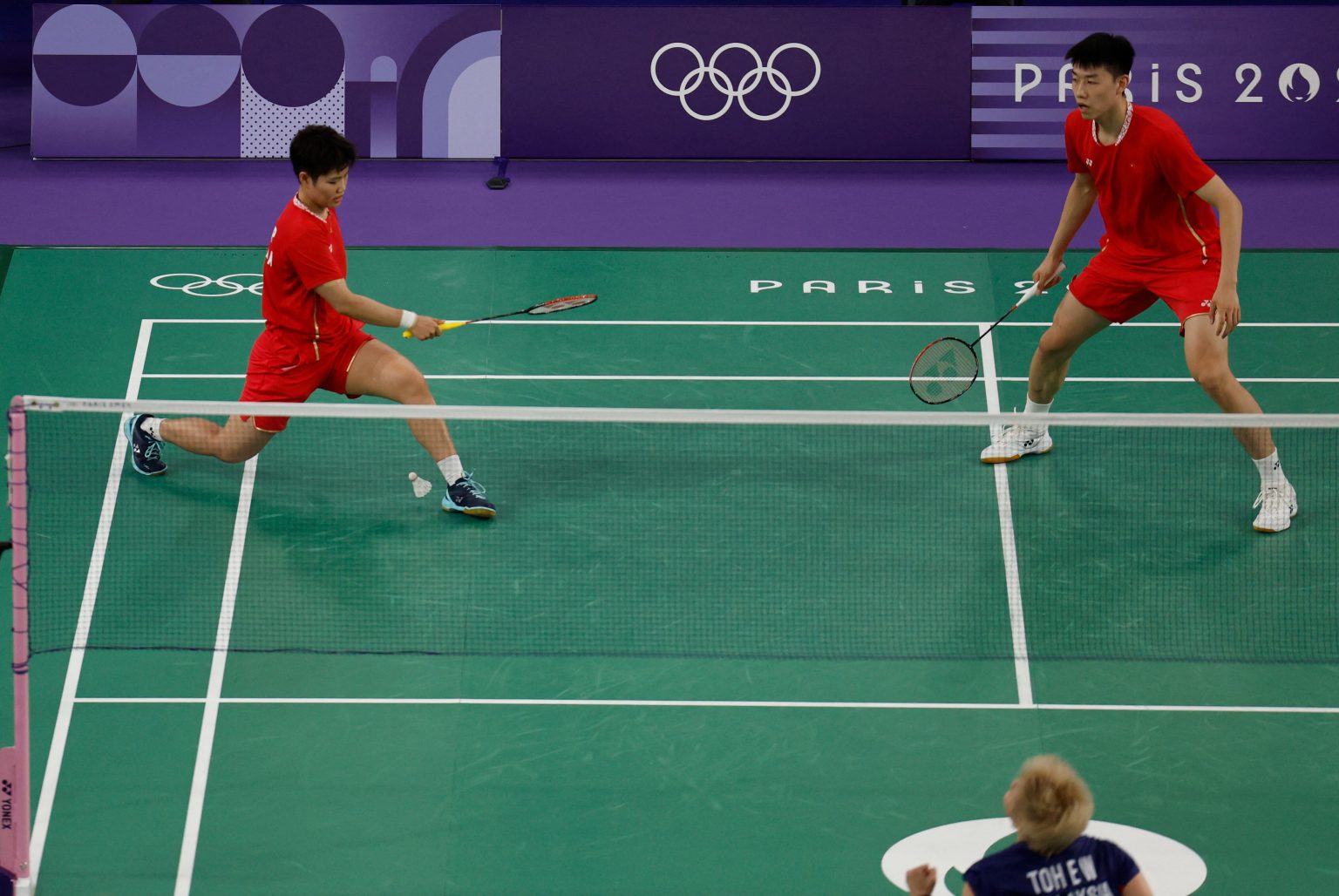
The shuttle explodes off the racket. Players change direction almost instantly. Smashes are followed by desperate defensive reactions, delicate net shots and lunges that stretch athletes across nearly every inch of the court.
It is fast.
It is technical.
It is exhausting.
And in large parts of the world, badminton isn’t a recreational backyard game at all. It is a major competitive sport with professional athletes, national heroes, packed arenas, international tours, world championships and Olympic medals at stake.
For an athlete—or a parent looking for a sport that rewards coordination, speed, intelligence and skill—badminton deserves a much closer look.
Quick Facts
| Sport | Badminton |
| International Governing Body | Badminton World Federation (BWF) |
| Olympic Status | Full Olympic medal sport since 1992 |
| Formats | Men’s Singles, Women’s Singles, Men’s Doubles, Women’s Doubles, Mixed Doubles |
| Playing Surface | Indoor court |
| Primary Equipment | Racket and shuttlecock |
| Standard Match | Best of three games |
| Game Scoring | 21-point rally scoring |
| Major Global Regions | Asia, Europe, increasingly North America and other international markets |
| Accessibility | High |
| Development Potential | High |
Badminton became an official Olympic medal sport at Barcelona 1992. The Olympic program now includes five medal events: men’s and women’s singles, men’s and women’s doubles, and mixed doubles.
That mixed doubles component is particularly important. Badminton provides men and women opportunities across parallel singles and doubles competitions while also placing male and female athletes together in one of the sport’s highest-profile disciplines.
Did You Know?
A badminton shuttlecock behaves very differently from a ball.
Its feathered—or synthetic—design creates tremendous aerodynamic drag. It can leave the racket at extraordinary speed and then decelerate dramatically as it crosses the court.
That creates one of badminton’s defining characteristics:
Players have almost no time to react, yet they still have to anticipate how quickly the shuttle will slow and where it will fall.
The combination makes elite badminton much more tactically complicated than simply hitting the shuttle as hard as possible.
Watch Badminton in Action
The easiest way to understand badminton is to watch elite competition.
Start with the Badminton World Federation, the international governing body responsible for the sport:
For the international professional tournament circuit:
BWF World Tour:
https://bwfworldtour.bwfbadminton.com/
For Olympic badminton:
Olympics – Badminton:
https://olympics.com/en/sports/badminton/
For American athletes, competitions and development information:
USA Badminton:
https://usabadminton.org/
Spend a few minutes watching high-level singles and then high-level doubles.
They almost look like different sports.
Singles emphasizes court coverage, movement, patience, positioning and the ability to create openings.
Doubles is extraordinarily fast. Flat exchanges, aggressive net play, rapid rotations and explosive attacks can turn a point in seconds.
What Is Badminton?
Badminton is a racket sport played by either two players in singles or four players in doubles.
Players strike a shuttlecock over a net and attempt to land it inside the opponent’s court.
Unlike tennis, the shuttle cannot bounce.
Once it touches the floor, the rally is finished.
That single difference fundamentally changes the game.
Players must constantly move into position before the shuttle arrives. There is no second chance after a bounce.
A standard match is best-of-three games. Games are normally played to 21 points using rally scoring.
At 20-20, a player or team generally must establish a two-point advantage. If the score reaches 29-29, the next point decides the game.
But the rules are the easy part.
The challenge is getting to the shuttle.
By the Numbers
| Badminton | The Numbers |
|---|---|
| Players | 1 vs. 1 or 2 vs. 2 |
| Olympic medal events | 5 |
| Points needed to normally win a game | 21 |
| Games needed to win a match | 2 |
| Court length | 44 feet |
| Doubles court width | 20 feet |
| Singles court width | 17 feet |
| Olympic debut as a medal sport | 1992 |
| International federation founded | 1934 |
The dimensions make badminton look relatively compact.
That can be deceptive.
Because the shuttle cannot bounce and can be directed almost anywhere, players repeatedly accelerate, stop, lunge, recover, rotate and explode toward another part of the court.
A small playing area produces an enormous movement challenge.
The Athlete Experience
Badminton rewards a fascinating combination of athletic qualities.
Explosive Movement
Players rarely run long distances in a straight line.
Instead, they repeatedly perform:
- split steps
- short accelerations
- lateral movements
- lunges
- jumps
- rapid changes of direction
- recovery steps
The best players seem to arrive at the shuttle effortlessly.
They aren’t.
That movement is the product of years of footwork training and anticipation.
Reaction Speed
At higher levels, badminton happens extremely quickly.
Players must read an opponent’s body position and racket angle before the shuttle is struck.
Waiting until the shuttle is already traveling toward you is often too late.
Coordination
Badminton demands precise coordination between the eyes, feet, body and racket.
A player can arrive at the right location and still lose the rally because the racket face is slightly wrong.
Endurance
Rallies can move from patient exchanges to explosive attacks and back again.
Matches require athletes to repeatedly produce high-intensity movements while maintaining technical precision.
Mental Toughness
Momentum changes quickly.
One poor sequence can turn a comfortable lead into a close game.
Successful players learn to reset, solve problems and adapt to opponents during competition.
How Badminton Players Become Great
Beginners often focus almost entirely on the racket.
Experienced coaches know the game begins with the feet.
Footwork
Efficient movement allows players to reach the shuttle earlier and recover more quickly.
Athletes learn patterns that help them move from a central base toward the front, sides and rear court.
The Serve
Serving in badminton is not designed around overwhelming power.
Placement, variation and deception matter enormously.
In doubles especially, the serve and return can determine who gains the attacking advantage immediately.
The Clear
A clear sends the shuttle deep toward the opponent’s back court.
It can relieve pressure, change positioning or create space elsewhere.
The Drop Shot
A drop looks like a deeper attacking stroke but lands softly near the net.
Good drop shots force opponents forward.
The Smash
The smash is badminton’s signature attacking shot.
It is hit sharply downward with speed and power.
But smashing repeatedly without creating the right opportunity can be ineffective.
The best attackers create the opening first.
Net Play
Some of badminton’s most impressive skill happens only inches above the net.
Players use touch, deception and precise racket control to force opponents to lift the shuttle upward—creating an opportunity to attack.
Why Athletes Love Playing Badminton
Badminton offers something unusual: it is easy to begin and incredibly difficult to master.
A beginner can grab a racket and start exchanging shots almost immediately.
That creates instant participation.
But every improvement reveals another layer.
Footwork becomes more sophisticated.
Shots become more deceptive.
Placement becomes more important.
Players begin recognizing patterns.
Then they discover that the opponent is recognizing those patterns too.
That endless learning curve gives badminton tremendous staying power.
It is also a sport athletes can continue playing recreationally long after their competitive years end.
Why Parents Should Pay Attention to Badminton
For parents exploring sports for their children, badminton has several attractive characteristics.
The equipment requirement is relatively modest compared with many sports.
You don’t need pads, helmets, skates, large playing fields or expensive specialized facilities simply to begin learning the game.
A basic racket, shuttlecocks, athletic shoes and access to a court can get an athlete started.
More importantly, badminton develops skills that transfer well across athletics:
- hand-eye coordination
- balance
- agility
- reaction speed
- spatial awareness
- lower-body strength
- decision-making
- competitive composure
The sport also provides singles and doubles pathways.
Some athletes thrive on the independence of singles.
Others prefer the communication and partnership of doubles.
Badminton offers both.
Youth & Development
Badminton has one of the world’s deepest development systems, particularly in countries where the sport has long been embedded in schools, clubs and national sporting structures.
Countries including China, Indonesia, India, Japan, South Korea, Malaysia and Denmark have produced internationally successful players and sophisticated development programs.
In the United States, the sport remains much smaller than basketball, baseball or soccer—but there is a legitimate competitive pathway.
USA Badminton oversees the sport nationally:
The organization supports junior competition, national championships and international athlete pathways.
The 2026 U.S. Junior National Championships, for example, were held July 8–14 in the Wichita, Kansas area, while U.S. juniors also competed internationally during the year. That is an important distinction for families discovering the sport: competitive badminton in America extends far beyond recreational gym-class play.
Players interested in international development can also explore the Badminton World Federation:
The challenge—especially in the United States—is often finding the right club and coaching environment locally.
Where strong badminton clubs exist, serious development can begin surprisingly early.
The Fan Experience
Badminton is exceptionally television-friendly once viewers understand what they are watching.
The court is compact.
The action is continuous.
Points develop quickly.
And unlike sports that require extensive tactical knowledge before they become enjoyable, badminton’s basic objective is immediately understandable:
Get the shuttle over the net and onto the floor.
But knowledgeable fans begin watching something deeper.
Can a player force an opponent toward the backhand corner?
Can the attacking pair maintain downward pressure?
Will a deceptive shot send the opponent in the wrong direction?
Can a singles player survive a long rally and still produce an explosive attack?
Those tactical battles turn badminton from simple entertainment into compelling competition.
Badminton’s Global Footprint
Badminton’s greatest strength as a sports market is geography.
This is not a sport dependent on one country.
Its competitive power is distributed across multiple major international markets.
China
China has been one of badminton’s defining competitive powers and has produced generations of Olympic and world champions.
Its combination of elite development, domestic sporting infrastructure and international success makes it one of the most important badminton markets on earth.
Indonesia
Few countries connect national sporting identity with badminton as strongly as Indonesia.
Elite players can become major national figures, and international tournaments in the country can produce extraordinary atmospheres.
India
India represents one of badminton’s most interesting growth markets.
A huge population, expanding sports economy and internationally successful players have helped move badminton further into the country’s mainstream sporting conversation.
Malaysia
Badminton has deep cultural and competitive importance in Malaysia.
The country’s leading players have attracted enormous attention, and international badminton remains part of the national sports landscape.
Japan and South Korea
Both countries combine sophisticated sports systems with international badminton success.
They are important competitive, commercial and equipment markets.
Europe
Denmark stands out as one of the great badminton nations outside Asia.
The country has consistently produced athletes capable of challenging Asia’s strongest players, including multiple Olympic champion Viktor Axelsen.
Across Europe, badminton also benefits from strong club structures and continental competition.
Where Badminton Is Growing
One of badminton’s most intriguing opportunities is North America.
The United States has enormous participation potential.
It has:
- a large youth sports economy
- extensive school gym infrastructure
- diverse communities with deep connections to badminton-playing countries
- an established collegiate recreation culture
- growing specialized badminton facilities
- a massive consumer sporting-goods market
The challenge isn’t whether Americans can understand badminton.
They already do.
The challenge is converting casual familiarity into organized participation.
That means more clubs.
More courts.
More coaches.
More junior tournaments.
More visibility.
More opportunities for parents to discover a pathway for their children.
USA Badminton’s recent junior and international activity shows that pathway exists and continues to develop.
The Business of Badminton
Badminton has a surprisingly sophisticated commercial ecosystem.
At the elite level, the sport connects equipment manufacturers, professional tournaments, national federations, athletes, sponsors, broadcasters and training academies.
Badminton World Federation
The Badminton World Federation (BWF) governs international badminton and oversees the sport’s major international competition structure.
For anyone researching the global badminton market, this is the starting point.
BWF World Tour
The BWF World Tour connects elite tournaments across international markets and provides badminton with a season-long professional competition structure.
The tour gives athletes opportunities to earn ranking points and prize money while providing sponsors and host markets with recurring international events.
USA Badminton
USA Badminton is the national governing body for badminton in the United States and an important resource for athletes, coaches, clubs and families looking for competitive pathways.
Yonex
Yonex is one of badminton’s most recognizable global equipment brands.
Its badminton business includes rackets, shuttlecocks, strings, footwear, apparel and accessories.
The company’s equipment portfolio ranges from beginner products through professional-level rackets, demonstrating how deep the specialized badminton equipment market has become.
VICTOR
VICTOR is another major international badminton manufacturer with rackets, footwear, apparel and accessories used throughout the competitive game.
Li-Ning
Li-Ning is a major Chinese sports brand with a significant presence in badminton and the broader Asian sports marketplace.
Together, these companies illustrate something important about badminton:
This isn’t simply an Olympic sport.
It supports a global sporting-goods industry.
Equipment & Facilities
Badminton’s relatively manageable equipment requirements are one of its biggest advantages.
A player needs:
Racket
Modern badminton rackets are extremely lightweight and are designed around different combinations of speed, control and attacking power.
Shuttlecocks
Competitive shuttlecocks may use natural feathers, while synthetic versions are common for recreational and developmental play.
Shoes
Serious players use indoor court shoes designed for grip, lateral movement, lunging and rapid directional changes.
Strings and Grips
Advanced players become surprisingly particular about string type, tension and grip setup.
Court and Net
Badminton requires a marked court and net, making gymnasiums and multi-court indoor sports facilities natural homes for the sport.
This creates a strong business opportunity for facilities.
Multiple badminton courts can operate simultaneously inside a suitable indoor space, allowing clubs to support lessons, leagues, open play, junior programs and tournaments.
Major Badminton Competitions
The international calendar gives badminton a strong hierarchy of events.
Olympic Games
The Olympic Games provide badminton with its largest global multisport stage.
BWF World Championships
The World Championships bring together the best international players competing for individual world titles.
BWF World Tour
The World Tour provides the professional tournament backbone of international badminton.
All England Open
One of badminton’s oldest and most prestigious competitions, the All England remains a major event on the international calendar.
Thomas Cup
The Thomas Cup is the premier international men’s team competition.
Uber Cup
The Uber Cup is the corresponding elite women’s international team championship.
Sudirman Cup
The Sudirman Cup brings men’s and women’s disciplines together in international mixed-team competition.
This combination of individual tournaments, team championships and Olympic competition gives badminton multiple ways to create national rivalries and athlete storylines.
The Global Sports Market Index
| Factor | Rating | Global Sports Market View |
|---|---|---|
| Global Reach | 9.5/10 | Deep international presence with exceptional strength across Asia and established European markets |
| Participation Accessibility | 9.3/10 | Easy to begin with limited equipment requirements |
| Youth Development | 9.1/10 | Strong club and national development systems in leading badminton nations |
| Olympic Value | 9.5/10 | Five medal disciplines and established Olympic history |
| Fan Appeal | 8.7/10 | Fast, understandable and visually exciting |
| Commercial Ecosystem | 8.8/10 | Major equipment companies, sponsors and professional tournament structure |
| Growth Potential | 9.0/10 | Significant opportunity outside its strongest traditional markets |
| Discovery Value | 9.4/10 | Casual familiarity hides how spectacular elite badminton actually is |
Global Sports Market Intelligence Rating: 9.0/10
Classification: Established Global Sport with Significant Expansion Potential
Badminton earns one of the stronger ratings in the Global Sports Market Index because its fundamentals are exceptionally solid.
It is Olympic.
It is international.
It has elite professional competition.
It has major equipment manufacturers.
It works for men and women.
It offers singles, doubles and mixed doubles.
It is accessible enough for beginners but sophisticated enough to support lifelong competitive development.
Most importantly, badminton already has enormous cultural importance in several of the world’s largest sports markets.
The opportunity is not to invent a badminton economy.
It is to expand an existing global one.
The Future of Badminton
Badminton doesn’t need to become the next new sport.
It has already survived that test.
The bigger opportunity is bringing the sport’s elite identity to markets where badminton is still misunderstood as casual recreation.
That is particularly relevant in the United States.
Millions of people already recognize the racket and shuttlecock.
Far fewer have watched world-class doubles.
Far fewer know that young American athletes can enter national championships and pursue international competition.
And far fewer understand the size of badminton’s global ecosystem.
Digital media can help close that gap.
A spectacular rally can be understood without translation.
A diving defensive save followed by a 300-plus-kilometer-per-hour attack doesn’t require a 20-minute explanation.
The athleticism sells the sport.
Badminton simply needs more people to see it.
Global Sports Market Verdict
Market Position: Established global Olympic sport
Accessibility: Excellent
International Reach: Exceptional
Commercial Ecosystem: Strong
Youth Development Opportunity: Excellent
North American Growth Opportunity: Significant
Discovery Value: Exceptional
Badminton may be one of the best examples of what theGLOBALSPORTSMARKET.com is trying to uncover.
For millions of people, especially across Asia, there is absolutely nothing obscure about this sport.
It is serious competition.
It is national pride.
It is Olympic ambition.
It is professional sport.
Yet another enormous audience still thinks of badminton primarily as something played casually in a backyard.
That disconnect creates opportunity.
Because the first time someone watches truly elite badminton, the reaction is often the same:
I had no idea badminton looked like this.
That is exactly why the sport belongs on the global sports discovery map.
Continue Your Global Sports Discovery Journey
Badminton sits inside a fascinating global family of racket, court and net sports. Continue exploring theGLOBALSPORTSMARKET.com:
Beyond the Basement: Why Table Tennis Is One of the World’s Biggest Sports
Another Olympic sport where extraordinary speed, reflexes and technical precision transform a familiar recreational activity into elite international competition.
Why Pickleball Matters: The Sport That Nobody Saw Coming
See how another accessible racket sport turned low barriers to entry into explosive participation growth.
Why Sepak Takraw Matters: The World’s Most Spectacular Sport You’ve Probably Never Seen
The court and net may look familiar, but Sepak Takraw replaces the racket with extraordinary acrobatic athleticism.
And if you’re a parent researching badminton specifically, don’t miss our existing guide:
Badminton Guide for Parents: Costs, Gear, Rules & Youth Pathways 2026
A practical starting point for families looking at equipment, costs, rules and youth development.
Explore Badminton
Ready to go deeper?
International Competition: https://bwfbadminton.com/
Professional Tour: https://bwfworldtour.bwfbadminton.com/
Olympic Badminton: https://olympics.com/en/sports/badminton/
USA Badminton: https://usabadminton.org/
Yonex Badminton: https://www.yonex.com/badminton
VICTOR Badminton: https://www.victorsport.com/
Whether you’re an athlete looking for a new challenge, a parent searching for the right sport, a coach studying player development, or simply a sports fan curious about what exists beyond the games you already know, badminton is worth discovering.
Explore the sport. Find a court. Watch the world’s best. Then pick up a racket and see how fast the game really is.
Published by KODA8, LLC / theGLOBALSPORTSMARKET.com

Author: Howie
We are building a network of digital resources designed to bring some much-needed order to the internet's most chaotic corners. I don't just collect domains; I build them into authoritative hubs for the topics I’m passionate about.