



Global Sports Market Intelligence Report
Sport: Swimming
Primary Category: Water Sports
Market Stage: Established Global Sport
Global Sports Market Intelligence Rating: 9.4/10
Olympic Status: Summer Olympic Sport
International Governing Body: World Aquatics
U.S. Governing Body: USA Swimming
- Global Sports Market Intelligence Report
- World Aquatics
- Olympic Swimming
- USA Swimming
- NCAA Swimming
- SwimSwam
- Freestyle
- Backstroke
- Breaststroke
- Butterfly
- Cardiovascular Endurance
- Explosive Power
- Technique
- Mobility
- Core Strength
- Mental Discipline
- Technical Development
- Physical Development
- Tactical Development
- United States
- Australia
- Europe
- China
- Japan
- Canada
- Learn-to-Swim Programs
- Women’s Swimming
- Masters Swimming
- Open-Water Swimming
- Emerging Swimming Nations
- USA Swimming Find a Team & Lessons
- World Aquatics
- USA Swimming
- USA Swimming Foundation
- NCAA
- U.S. Masters Swimming
- Swimsuits
- Speedo
- TYR
- Arena
- Olympic Games
- World Aquatics Championships
- World Aquatics Swimming World Cup
- World Aquatics Swimming Championships (25m)
- NCAA Swimming Championships
- The Objective Is Obvious
- The Clock Creates Drama
- Records Matter
- Rivalries Are Visible
- The Finish Is Immediate
- Relays Create Team Drama
- Better Performance Technology
- Greater Access to Instruction
- Facility Development
- Athlete Storytelling
- Global Development
- 9.4 / 10 — Established Global Powerhouse
- World Aquatics
- USA Swimming
- Find a USA Swimming Team or Swim Lessons
- Olympic Swimming
- NCAA Swimming
- U.S. Masters Swimming
- SwimSwam
- Why Underwater Hockey Matters: The Fast-Paced Underwater Sport Most Fans Have Never Discovered
- Discover Sailing: The Sport Where Wind, Strategy and Innovation Come Together
- Cross Country Explained: More Than Just Running Through the Woods
- Why Figure Skating Matters: The Global Sport Where Athleticism Meets Artistry
The Simplest Race in Sports Is Anything But Simple
Stand at the end of a swimming pool and the objective seems almost impossible to misunderstand.
Get from one end to the other faster than everyone else.
No ball.
No racket.
No complicated scoring system.
No opponent trying to tackle you.
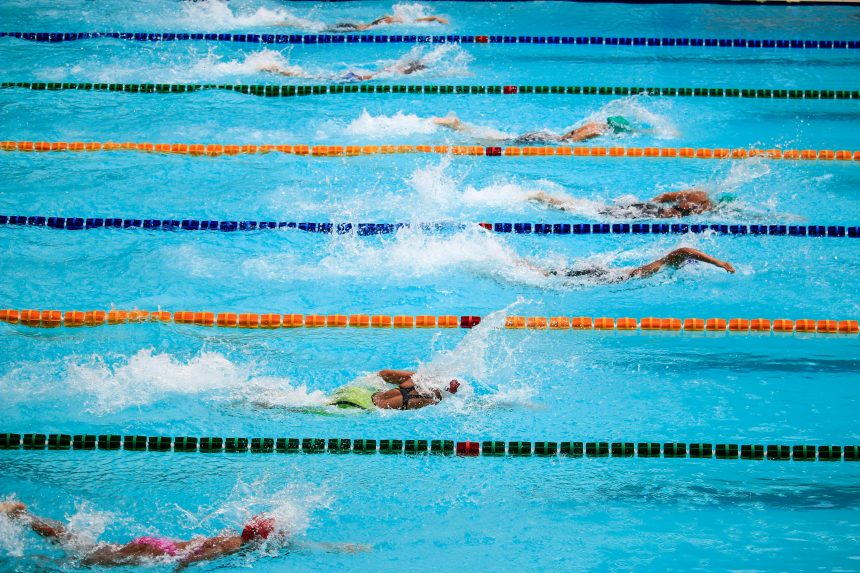
Just water, a lane, a clock and the swimmer next to you.
Then watch an elite race.
A start can be won or lost by fractions of a second.
A turn can change the entire race.
One poorly timed breath can disrupt a stroke.
A swimmer can travel underwater faster than competitors swimming on the surface.
And after hundreds or even thousands of hours of training, the difference between winning and losing can be measured in hundredths of a second.
That contradiction is part of what makes swimming extraordinary.
It may be one of the easiest sports in the world to understand — and one of the hardest to master.
Swimming also occupies an unusual position in the global sports landscape.
It is an Olympic spectacle.
It is a high school and collegiate sport.
It is a professional and international competition.
It is a youth development activity.
It is a recreational pursuit practiced by millions.
And unlike almost every other major sport, learning its fundamental skill can also save a person’s life.
That combination gives swimming a reach far beyond the competition pool.
Did You Know?
- Competitive swimming has been part of every modern Summer Olympic Games since 1896.
- Women’s swimming entered the Olympic program in 1912.
- The four primary competitive strokes are freestyle, backstroke, breaststroke and butterfly.
- Individual medley races require athletes to compete using all four strokes.
- Olympic pools are 50 meters long, while many school and club competitions use shorter pools.
- Swimmers can compete individually or as members of relay teams.
- Open-water swimming takes the sport beyond the pool and into lakes, rivers and oceans.
- Starts, turns and underwater movement can be just as important as surface swimming.
- Competitive swimming develops athletes from learn-to-swim programs through clubs, schools, universities, national teams and international competition.
- USA Swimming’s club finder currently lists more than 2,800 clubs, creating one of the largest organized youth-development infrastructures in American sport.
By the Numbers
| Swimming | Snapshot |
|---|---|
| International Governing Body | World Aquatics |
| Olympic Debut | 1896 |
| Women’s Olympic Debut | 1912 |
| Primary Strokes | 4 |
| Olympic Pool Length | 50 meters |
| Short-Course Pool | 25 meters |
| U.S. Governing Body | USA Swimming |
| Major Development Channels | Clubs, schools, colleges, national programs |
| Primary Competition Types | Pool, relay and open water |
| Global Sports Market Rating | 9.4/10 |
Watch Swimming in Action
Swimming is one of those sports that becomes much easier to appreciate once you watch elite athletes closely.
Start with the organizations that actually govern and develop the sport.
World Aquatics
The international governing body provides competition coverage, results, rankings, athlete information and access to the world’s major aquatic championships.
Olympic Swimming
The Olympic platform provides an excellent introduction to the sport, its athletes and its place within the Summer Games.
USA Swimming
USA Swimming provides competition coverage, National Team information, athlete development resources and access to the American swimming ecosystem.
NCAA Swimming
College swimming offers another opportunity to see elite athletes competing in a team-oriented environment where individual races contribute to an overall team score.
SwimSwam
One of the most established independent media platforms devoted specifically to competitive swimming.
What Is Competitive Swimming?
Competitive swimming is racing through water over a defined distance using regulated swimming techniques.
That simple definition contains an enormous amount of complexity.
Athletes compete in different strokes, distances and race formats.
The primary strokes are:
Freestyle
Freestyle races allow swimmers considerable freedom in technique, although virtually every elite swimmer uses the front crawl because it is generally the fastest way to move through the water.
It is the stroke most people picture when they think about competitive swimming.
Backstroke
Backstroke swimmers race while positioned on their backs.
The stroke requires excellent body position, rotation and spatial awareness because athletes cannot simply look toward the wall as they approach it.
Breaststroke
Breaststroke looks slower and more deliberate than freestyle, but technically it can be extremely demanding.
The arms and legs move in synchronized patterns governed by specific competition rules.
Timing is everything.
Butterfly
Butterfly is one of swimming’s most visually distinctive strokes.
Both arms recover simultaneously while a powerful dolphin kick drives the athlete through the water.
It demands exceptional rhythm, strength and conditioning.
The Individual Medley: Swimming’s Complete Test
Want to find the most versatile swimmer in the pool?
Watch the individual medley.
Athletes must race all four competitive strokes:
- Butterfly
- Backstroke
- Breaststroke
- Freestyle
Being exceptional at one stroke is not enough.
The athlete must manage technique, transitions, pacing and fatigue across completely different movement patterns.
Medley swimmers are among the sport’s most technically complete athletes.
Starts Can Decide Races Before the Swimming Really Begins
Swimming races do not begin with swimming.
They begin with explosive movement.
In freestyle, butterfly and breaststroke events, athletes launch from starting blocks positioned above the water.
A great start requires:
Reaction speed
The swimmer must respond immediately to the starting signal without leaving early.
Explosive power
Athletes drive from the block and attempt to enter the water with maximum speed.
Entry efficiency
A poor entry creates drag.
A clean entry preserves momentum.
Underwater speed
The race continues beneath the surface.
Elite swimmers use streamlined body positions and underwater kicks to maintain speed before beginning their surface stroke.
Backstroke starts are different.
Swimmers begin in the water and launch backward from grips mounted on the starting block.
Either way, the first seconds matter enormously.
The Hidden Race Underwater
Casual fans often watch what happens on top of the water.
Coaches watch what happens underneath it.
Underwater movement has become one of the most important components of elite swimming.
After starts and turns, swimmers streamline their bodies and use powerful underwater kicking before resurfacing.
Why?
Because water resistance makes efficient movement incredibly important.
An athlete who maintains speed underwater can gain significant distance before beginning the next swimming cycle.
This is one reason elite races look so different from recreational swimming.
The best swimmers aren’t simply stronger.
They have learned how to manipulate water.
Turns: Where Races Are Won and Lost
Every time a swimmer reaches the wall, another technical challenge begins.
The athlete must:
approach the wall at speed,
execute the correct turn,
push explosively away,
establish a streamlined position,
transition into underwater movement,
and return to the stroke without losing momentum.
Freestyle and backstroke commonly use variations of the flip turn.
Breaststroke and butterfly require different wall-contact techniques.
In longer races, swimmers repeat these movements again and again.
A tiny mistake multiplied across multiple turns can become a major competitive disadvantage.
Why People Love Swimming
Swimming offers something few sports can match:
progress that athletes can measure almost perfectly.
A swimmer doesn’t have to wonder whether they improved.
The clock tells them.
1:02.43 becomes 1:01.91.
Then 1:00.88.
Eventually perhaps 59.97.
Those numbers become personal milestones.
That creates a deeply individual relationship with improvement.
But swimming is not purely individual.
Club teams, high school teams, college teams and national teams create strong communities around athletes who spend enormous amounts of time training together.
Then there are relays.
Four athletes suddenly become one racing unit.
For a sport built around individual lanes, relay races can produce some of swimming’s most emotional moments.
The Athlete Experience
Competitive swimming demands an unusual combination of physical abilities.
Cardiovascular Endurance
Training often involves substantial volumes of repeated swimming, developing powerful aerobic capacity.
Explosive Power
Starts, turns and sprint races require tremendous lower-body and core power.
Technique
Raw athleticism cannot overcome inefficient movement forever.
Water punishes wasted motion.
Mobility
Shoulder, ankle, hip and thoracic mobility can significantly influence swimming mechanics.
Core Strength
A stable body position reduces drag and helps transfer power through the water.
Mental Discipline
Competitive swimmers spend countless hours repeating strokes, turns, starts and training sets.
Progress often comes in fractions of seconds.
That demands patience.
How Swimmers Become Great
Swimming development usually happens gradually.
Young athletes first become comfortable in the water.
Then they learn basic stroke mechanics.
Then comes competitive technique.
Eventually training becomes increasingly specialized.
Technical Development
Athletes refine:
- body position
- stroke efficiency
- breathing
- kicking
- starts
- turns
- underwater movement
- finishes
Physical Development
Training develops:
- aerobic capacity
- anaerobic power
- muscular endurance
- strength
- mobility
- coordination
Tactical Development
Yes, swimming has tactics.
Athletes learn how to:
- pace longer races
- attack sprint events
- manage breathing patterns
- position themselves during open-water races
- time finishing surges
- understand competitors
The clock may determine the winner, but race intelligence helps determine the clock.
The Development Pathway
One of swimming’s greatest strengths is the number of entry points into the sport.
A child might begin with basic swim lessons.
Then join a recreational team.
Then a competitive club.
Then compete for a middle school or high school.
Some progress into NCAA programs.
The very best may reach national championships, international competition and the Olympic Games.
USA Swimming supports multiple membership and development pathways ranging from introductory participation through eligibility for major national competitions and Olympic qualification pathways.
That creates a recognizable ladder:
Learn to Swim → Youth Club → Competitive Club → High School → College → National Competition → International Competition
Very few athletes will reach the final stages.
But millions can participate somewhere along the pathway.
High School Swimming
Swimming holds an important position in American high school athletics.
It provides opportunities for:
- sprinters
- endurance athletes
- stroke specialists
- medley swimmers
- relay swimmers
And because athletes compete individually while contributing points toward a team score, swimming creates an interesting combination of personal and team competition.
A swimmer can chase a personal-best time while simultaneously helping their school win a meet.
For many athletes, high school swimming also creates the bridge between club competition and collegiate recruiting.
College Swimming
American college swimming represents one of the strongest elite-development systems in the world.
NCAA Swimming brings together athletes from the United States and around the world.
College competition changes the atmosphere dramatically.
Crowds surround the pool.
Teammates line the deck.
Every place matters.
Relays become major events.
Individual results accumulate into team scores.
For athletes who grew up watching the clock, college swimming introduces another motivation:
swimming for the team.
Swimming and the Olympic Games
Swimming is one of the defining sports of the Summer Olympics.
The sport has been part of the Olympic program since the first modern Games in 1896.
Olympic swimming combines:
- freestyle
- backstroke
- breaststroke
- butterfly
- individual medley
- relays
- open-water competition
The format also produces something particularly valuable for spectators:
clarity.
Everyone can understand who touches the wall first.
That simplicity makes swimming remarkably television-friendly.
Even viewers who know almost nothing about stroke mechanics can understand the race.
The Global Footprint
Swimming is truly international.
World Aquatics oversees international aquatic competition and maintains the sport’s global regulatory structure. Its current competition ecosystem includes the World Aquatics Championships, Swimming World Cup, Olympic competition and World Swimming Championships (25m).
Several countries have developed particularly powerful swimming cultures.
United States
The United States combines youth clubs, high school swimming, NCAA programs and an elite national-team system.
That infrastructure has produced generations of internationally successful swimmers.
Australia
Swimming occupies a particularly important place in Australian sporting culture.
A warm climate, extensive coastline, community pools and generations of Olympic success have helped make swimming part of the country’s sporting identity.
Europe
Great Britain, France, Germany, Italy, Hungary and other European nations maintain strong competitive programs.
China
China has become a major force across multiple aquatic disciplines and continues investing in elite swimming development.
Japan
Japan possesses a deep swimming tradition, particularly in technically demanding disciplines such as breaststroke and medley racing.
Canada
Canada has developed an increasingly successful international swimming program while maintaining a broad recreational and club ecosystem.
Swimming’s real global strength, however, is not limited to medal-winning nations.
Pools exist in communities around the world.
That gives the sport an infrastructure base that relatively few specialized sports can match.
Where Swimming Is Growing
Swimming does not need to be “discovered” in the same way as an emerging sport.
Its growth opportunity is different.
The opportunity is expanding access.
Learn-to-Swim Programs
This may be the most important part of the entire swimming ecosystem.
Before swimming becomes competition, it is a life skill.
Organizations around the world continue trying to increase access to quality instruction.
The USA Swimming Foundation supports learn-to-swim initiatives and community programs, while USA Swimming operates a network connecting families with qualified lesson providers.
Women’s Swimming
Swimming has one of the strongest and most established women’s competitive infrastructures in global sport.
Female swimmers compete through youth, high school, college, international and Olympic pathways.
Masters Swimming
Competition does not necessarily end after college.
Masters programs allow adults to train and race across age groups.
That creates lifetime participation potential rarely available in contact-heavy sports.
Open-Water Swimming
Open-water events expand the sport beyond traditional pools and create endurance competitions in natural environments.
Emerging Swimming Nations
As countries invest in aquatic facilities, coaching and water-safety education, competitive programs can develop alongside learn-to-swim infrastructure.
That makes facility development one of the biggest variables in swimming’s future expansion.
Youth & Development
Swimming has one enormous advantage over many youth sports:
Parents frequently want their children to learn how to swim whether they ever compete or not.
That creates an enormous entry funnel.
A child might enter swimming for safety.
Then discover racing.
Then join a club.
Then become a competitive athlete.
USA Swimming says its national ecosystem includes thousands of clubs teaching lessons and preparing athletes for competition.
For families in the United States, one of the best starting points is:
USA Swimming Find a Team & Lessons
The tool allows families to search for competitive clubs and Learn to Swim programs. USA Swimming currently reports more than 2,800 clubs in the finder.
This is exactly the kind of local discovery infrastructure that makes swimming more than an Olympic sport.
It creates a pathway into the sport.
The Business of Swimming
Swimming’s commercial ecosystem is much larger than what appears on television.
Unlike sports whose businesses revolve primarily around professional leagues, swimming generates economic activity across a broad participation pyramid.
That includes:
- swim schools
- youth clubs
- coaches
- pool operators
- aquatic facilities
- high school programs
- universities
- competition organizers
- timing technology
- equipment manufacturers
- swimwear companies
- training technology
- media
- national federations
- international events
A five-year-old learning to swim and an Olympic champion racing for a gold medal participate in very different parts of the same industry.
That is commercially significant.
Governing Bodies and Organizations
World Aquatics
The international governing body for aquatic sports, including swimming, diving, water polo, artistic swimming, open-water swimming and high diving.
World Aquatics establishes competition regulations and technical standards for international swimming.
USA Swimming
The national governing body responsible for competitive swimming development in the United States.
Its network connects athletes, clubs, coaches, officials and competitions.
USA Swimming Foundation
Supports swimming access, learn-to-swim initiatives and development programs.
NCAA
Provides one of the world’s most important collegiate competitive swimming environments.
U.S. Masters Swimming
Supports adult swimming, training and competition across the United States.
The Equipment Market
Swimming does not require much equipment to begin.
Competitive swimmers, however, quickly discover an entire performance ecosystem.
Swimsuits
Racing suits are engineered to reduce drag and improve hydrodynamic efficiency.
World Aquatics maintains rules governing approved competition swimwear.
Major manufacturers include:
Speedo
One of the world’s most recognizable swimming brands, producing competition swimwear, training suits, goggles and accessories.
TYR
A major performance swimming and multisport brand with a strong presence in competitive swimming.
Arena
A global swimwear company closely associated with elite competitive swimming.
Goggles
Competitive goggles must provide visibility while remaining secure during starts, turns and high-speed swimming.
Athletes choose goggles based on:
- fit
- lens visibility
- hydrodynamics
- comfort
- indoor versus outdoor conditions
For something so small, goggles can become extremely personal equipment.
Training Equipment
Walk onto a competitive pool deck and you’ll likely find:
- kickboards
- pull buoys
- paddles
- fins
- snorkels
- resistance equipment
- pace clocks
- timing systems
Each tool isolates or develops specific parts of swimming performance.
Technology has also expanded into video analysis, underwater cameras and performance tracking.
Swimming is increasingly becoming a data-driven sport.
Facilities: Swimming’s Greatest Strength and Biggest Limitation
Swimming requires water.
Competitive swimming requires considerably more.
A serious facility may need:
- regulation pool dimensions
- starting blocks
- lane lines
- timing systems
- spectator areas
- locker rooms
- filtration systems
- heating
- lifeguards
- maintenance staff
This creates one of swimming’s biggest contradictions.
Once a community has a pool, many people can use it.
But building and operating that pool can be expensive.
Facility access therefore remains one of the greatest barriers to expanding competitive swimming globally.
Major Competitions
Swimming’s elite calendar includes several major international events.
Olympic Games
The sport’s most visible global competition.
World Aquatics Championships
Brings together the world’s leading aquatic athletes across multiple disciplines.
World Aquatics Swimming World Cup
An international competition series featuring elite swimmers.
World Aquatics Swimming Championships (25m)
Short-course racing creates different tactical and technical demands because athletes encounter more turns over the same race distance.
The 2026 short-course world championships are scheduled for Beijing in December.
NCAA Swimming Championships
Among the premier collegiate swimming competitions in the world.
Fan Appeal
Swimming has several qualities that make it unusually accessible to spectators.
The Objective Is Obvious
Touch the wall first.
The Clock Creates Drama
Everyone sees the time.
Records Matter
World records, national records, school records and personal records create constant benchmarks.
Rivalries Are Visible
Competitors race side by side.
The Finish Is Immediate
Many races are decided at the wall.
Relays Create Team Drama
Individual athletes become part of something larger.
Swimming doesn’t need complicated explanation to create tension.
Sometimes the entire story is contained in one question:
Who gets to the wall first?
The Future of Swimming
Swimming’s future will not be defined by whether the sport survives.
It will.
The more interesting question is how far its ecosystem expands.
Several forces matter.
Better Performance Technology
Underwater video, biomechanics, analytics and wearable technology will continue helping athletes understand movement through water.
Greater Access to Instruction
Expanding learn-to-swim programs can simultaneously improve public safety and enlarge swimming’s athlete pipeline.
Facility Development
More accessible aquatic centers create more swimmers.
The equation is remarkably direct.
Athlete Storytelling
Olympic swimming creates stars every four years.
Digital media now gives those athletes opportunities to build audiences between Olympic cycles.
Global Development
Countries investing in aquatic infrastructure can develop both competitive athletes and broader swimming cultures.
That combination gives the sport substantial long-term stability.
Global Sports Market Index
| Category | Rating | Global Sports Market View |
| Global Reach | 9.5/10 | Swimming exists across nearly every major sports market |
| Participation Accessibility | 8.5/10 | Easy concept and broad appeal, but pool access can be limiting |
| Youth Development | 9.8/10 | One of the strongest youth-development funnels in sport |
| Olympic Importance | 10/10 | A foundational Summer Olympic sport |
| Commercial Ecosystem | 8.8/10 | Strong equipment, instruction, facility and event markets |
| Fan Accessibility | 9.2/10 | Extremely easy for new spectators to understand |
| International Competition | 9.7/10 | Deep national-team and championship infrastructure |
| Lifetime Participation | 9.8/10 | Recreational and competitive opportunities across age groups |
| Growth Opportunity | 8.7/10 | Growth tied strongly to access, facilities and instruction |
| Discovery Value | 9.0/10 | Familiar sport with a surprisingly deep ecosystem |
Global Sports Market Index Score: 93 / 100
Global Sports Market Intelligence Rating
9.4 / 10 — Established Global Powerhouse
Swimming scores exceptionally well because its relevance extends far beyond elite competition.
It combines:
Olympic prestige
with
mass participation
with
youth development
with
lifelong recreation
with
a genuine life skill.
Its greatest structural limitation is infrastructure.
You can play soccer in an open field.
You can run almost anywhere.
Swimming requires access to safe water, and competitive swimming usually requires a substantial aquatic facility.
But where that infrastructure exists, swimming can support an enormous ecosystem.
Global Sports Market Verdict
Market Position: Established Global Powerhouse
Accessibility: High once safe aquatic facilities are available
International Reach: Exceptional
Commercial Ecosystem: Strong and diversified
Youth Development: Elite
Olympic Value: Exceptional
Growth Opportunity: Significant through expanded facility and learn-to-swim access
Discovery Value: High
Swimming is much bigger than the race we see every four years at the Olympics.
It begins with someone learning how to stay safe in water.
For some people, that’s where the journey ends.
Others discover competition.
They join a team.
They learn four strokes.
They chase personal-best times.
Some swim in high school.
A smaller group reaches college.
A tiny fraction represent their country.
And a handful eventually stand behind an Olympic starting block with the entire world watching.
Yet all of them entered the same way.
They learned to move through water.
That enormous participation funnel is swimming’s greatest strength.
Few sports connect basic human safety, recreation, youth athletics, elite competition and the Olympic Games as naturally as swimming does.
And once the race starts, all of that complexity disappears.
There is a lane.
There is a wall.
There is a clock.
Get there first.
Explore Swimming
Ready to go deeper into the sport?
World Aquatics
Follow international swimming, world championships, results and elite athletes.
USA Swimming
Explore American competitive swimming, athlete development, national teams and events.
Find a USA Swimming Team or Swim Lessons
Search for clubs and learn-to-swim programs in your area.
Olympic Swimming
Explore Olympic swimming, athletes, competition history and major moments.
NCAA Swimming
Follow collegiate swimming programs and championship competition.
U.S. Masters Swimming
Explore adult swimming programs and competitive opportunities.
SwimSwam
Follow competitive swimming news, results, recruiting and international coverage.
Continue Your Global Sports Discovery Journey
Swimming sits at the intersection of Olympic competition, aquatic sports, endurance training and youth development. Continue exploring the wider sports world on theGLOBALSPORTSMARKET.com:
Why Underwater Hockey Matters: The Fast-Paced Underwater Sport Most Fans Have Never Discovered
Swimming ability becomes the foundation for an entirely different underwater team sport.
Discover Sailing: The Sport Where Wind, Strategy and Innovation Come Together
Move from the pool to open water and explore another globally established aquatic sport.
Cross Country Explained: More Than Just Running Through the Woods
Compare swimming’s endurance development with one of the most accessible endurance sports in high school athletics.
Why Figure Skating Matters: The Global Sport Where Athleticism Meets Artistry
Explore another Olympic sport where years of technical development turn extremely complex movement into something that can look effortless.
Published by KODA8, LLC / theGLOBALSPORTSMARKET.com
The Global Sports Market is building a worldwide sports intelligence and discovery platform designed to help athletes, parents, fans and organizations understand the sports, organizations, competitions and opportunities that make up the global sports ecosystem.

Author: Howie
We are building a network of digital resources designed to bring some much-needed order to the internet's most chaotic corners. I don't just collect domains; I build them into authoritative hubs for the topics I’m passionate about.