



Global Sports Market Intelligence Report
Sport: Wrestling
Category: Combat Sports
Market Stage: Global / Established / Expanding in Key Segments
Global Sports Market Intelligence Rating: 9.2/10
Olympic Status: Olympic Sport — Freestyle and Greco-Roman
International Governing Body: United World Wrestling
U.S. Governing Body: USA Wrestling
- Global Sports Market Intelligence Report
- Clubs and Membership
- Events
- Camps and Training
- Equipment
- Media
- College and Institutional Investment
- Global Sports Market Intelligence Rating: 9.2/10 — Global Sports Institution With Major Growth Potential
- United World Wrestling
- USA Wrestling
- NCAA Wrestling
- Olympic Wrestling
- FloWrestling
- National Wrestling Coaches Association
- Field Hockey
- Ice Hockey
- Lacrosse
- Why Hurling Matters: Ireland’s Fastest and Most Fascinating Sport
- Why Sepak Takraw Matters: The World’s Most Spectacular Sport You’ve Probably Never Seen
- Published By
One of Humanity’s Oldest Sports Is Still Evolving
Long before modern stadiums, professional leagues or organized school sports, people wrestled.
Images and records of wrestling appear across ancient civilizations. The sport was part of the ancient Olympic Games, appears throughout cultural traditions around the world and remains one of the most fundamental forms of athletic competition ever created.
Two athletes.
A defined space.
Balance.
Leverage.
Strength.
Technique.
Control.
No ball. No stick. No machine between the competitors.
That simplicity is part of wrestling’s enduring appeal.
But modern wrestling is much more than an ancient sport surviving into the present.
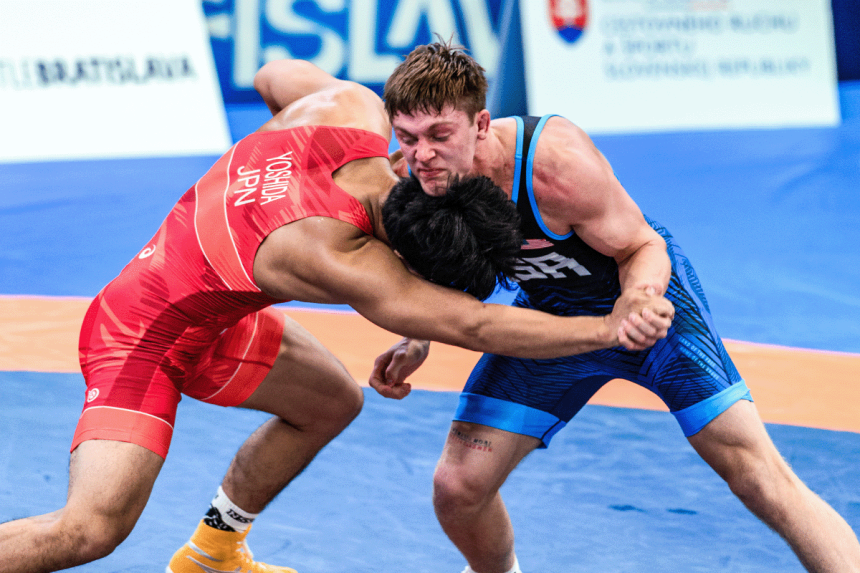
It is a global competitive system encompassing Olympic freestyle and Greco-Roman wrestling, women’s wrestling, American scholastic and collegiate competition, youth clubs, international championships and traditional wrestling styles that remain culturally important in countries around the world.
In the United States, wrestling is deeply embedded in high schools and colleges.
Internationally, countries including Japan, Iran, Türkiye, India, Mongolia, Georgia, Azerbaijan, Cuba, the United States and nations across Central Asia and Eastern Europe have developed powerful wrestling traditions.
And one of the most important developments in the modern market is happening rapidly:
more girls and women are entering the sport.
Wrestling is ancient.
Its next chapter is not.
By the Numbers
| Indicator | Wrestling |
|---|---|
| Historical roots | Ancient civilizations worldwide |
| International governing body | United World Wrestling |
| U.S. governing body | USA Wrestling |
| Olympic disciplines | Freestyle and Greco-Roman |
| Women’s Olympic discipline | Freestyle |
| Modern Olympic presence | Since Athens 1896 |
| Major U.S. college championship | NCAA Wrestling Championships |
| Major international event | UWW World Championships |
| Major U.S. development base | Youth, high school and college wrestling |
| Major growth segment | Girls’ and women’s wrestling |
| Olympic future | Los Angeles 2028 |
Wrestling’s market is unusual because no single commercial professional league defines the sport.
Its strength comes from somewhere else:
participation, institutions, national teams and tradition.
That makes wrestling a very different sports business from basketball, baseball or hockey.
And that’s precisely why it’s interesting.
Wrestling Has Many Global Languages
“Wrestling” doesn’t mean exactly the same thing everywhere.
At the Olympic level, the two primary men’s disciplines are freestyle and Greco-Roman, while women’s Olympic wrestling uses freestyle rules.
In the United States, high schools and colleges primarily compete in folkstyle, also known as scholastic or collegiate wrestling.
Then there are traditional forms of wrestling with deep cultural roots around the world.
Japan has sumo.
Mongolia has Bökh.
Senegal has Laamb.
Türkiye has oil wrestling.
Switzerland has Schwingen.
India has long traditions associated with Kushti and Pehlwani.
These aren’t all governed by the same competitive system, but together they demonstrate something important:
Humans have repeatedly invented ways to wrestle.
The modern global sport sits on top of a much broader human tradition.
Watch Wrestling Around the World
United World Wrestling
The international governing body and primary resource for world championships, rankings, athletes, Olympic wrestling and global development.
USA Wrestling
The U.S. national governing body and an important resource for clubs, events, national teams, coaches, officials and athlete development.
NCAA Wrestling
Follow college wrestling scores, rankings and the NCAA championships.
Olympic Wrestling
Explore Olympic freestyle and Greco-Roman wrestling, athlete stories and Olympic history.
FloWrestling
A major wrestling-specific media platform covering high school, college, freestyle, Greco-Roman and major events.
In America, Wrestling Is Built From the Bottom Up
Wrestling’s American ecosystem doesn’t begin with a professional franchise.
It begins with the local wrestling room.
A youth club.
A recreation program.
A middle-school team.
A high-school program.
A coach teaching a child how to hold a stance.
From there, the pathway can expand:
Youth Club → Middle School → High School → College → Senior Freestyle/Greco-Roman → National Team → World Championships/Olympics
But that straight line describes only a small percentage of participants.
Most wrestlers will never compete internationally.
They don’t need to.
A healthy wrestling ecosystem also needs children learning the sport, high-school athletes representing their communities, college wrestlers competing at every level and adults staying connected as coaches, officials, parents and fans.
Wrestling is particularly dependent on that cycle.
Today’s athlete often becomes tomorrow’s coach.
The sport reproduces itself through people.
Find the Wrestling Room
This is exactly where the Global Sports Directory can become valuable.
For a parent interested in wrestling, the most useful question may not be who won the last world championship.
It’s:
Where can my child wrestle?
Is there a youth club nearby?
Does the high school have a program?
Is there a girls’ wrestling team?
Where are the tournaments?
Are there beginner clinics?
Summer camps?
Private coaches?
College matches?
Freestyle clubs?
Greco-Roman training?
As the directory grows, our goal is to help readers find:
Youth Clubs • School Programs • Girls’ Wrestling Programs • Wrestling Rooms • Training Centers • Camps • Clinics • Coaches • Tournaments • College Programs • Freestyle Clubs • Greco-Roman Programs • International Events
Wrestling opportunities often exist without being particularly easy for newcomers to discover.
A strong local directory can change that.
The article explains wrestling. The directory helps someone walk into a wrestling room.
High School Wrestling Is One of the Sport’s Great Foundations
Few sports are as closely connected to the American high-school system as wrestling.
School wrestling gives communities a relatively accessible competitive structure.
The team needs mats and coaching, but it doesn’t require an ice rink, massive outdoor field or expensive purpose-built stadium.
Competition can take place inside existing school gymnasiums.
Dual meets create head-to-head team competition.
Individual tournaments can bring dozens or hundreds of athletes together.
State championships become major goals.
And increasingly, that structure is available to both boys and girls.
The rise of girls’ high-school wrestling is one of the most consequential developments in the American sport.
It increases participation.
Creates new coaching opportunities.
Strengthens college pipelines.
Expands the equipment market.
And introduces wrestling to families that previously may never have considered it.
This isn’t simply adding another division.
It is expanding the entire wrestling ecosystem.
Women’s Wrestling Is Changing the Market
For much of wrestling’s organized history, opportunities for women were limited.
That has changed dramatically.
Women’s freestyle wrestling became an Olympic sport at Athens 2004, creating the highest-profile international destination possible.
Since then, development systems have expanded.
More countries field women’s national teams.
More girls wrestle in schools and clubs.
More American colleges are adding women’s programs.
And women’s wrestling has become increasingly visible within the NCAA system.
That growth matters commercially as well as competitively.
More athletes mean demand for:
Coaches • Events • Uniforms • Footwear • Camps • Facilities • Media • Scholarships • College Programs
But the biggest change may be cultural.
A girl walking into a wrestling room today is increasingly likely to see other girls already there.
That changes what feels possible.
And once participation reaches critical mass, growth can accelerate quickly.
College Wrestling Creates Loyalty Few Sports Can Manufacture
College wrestling occupies a distinctive place in the American sports landscape.
The NCAA Wrestling Championships bring together elite collegiate athletes and some of the sport’s most passionate supporters.
Programs including Penn State, Iowa, Oklahoma State, Cornell, Ohio State and Iowa State carry traditions extending across generations.
The atmosphere can surprise people who think wrestling is a niche sport.
In established markets, fans know individual wrestlers.
They understand weight classes.
They follow recruiting.
They travel to tournaments.
They debate matchups.
They care deeply about team points.
College wrestling demonstrates an important GSM principle:
A sport doesn’t need mass-market professional franchises to create powerful fandom.
It needs competition people care about.
The International Wrestling Map Is Deep
Olympic and world-level wrestling reveals just how international the sport really is.
The United States is a major freestyle power.
Japan has become extraordinary in women’s wrestling while maintaining deep wrestling traditions.
Iran treats wrestling as one of its most important sports.
Türkiye has centuries of wrestling history.
Georgia and Azerbaijan consistently produce elite competitors.
Cuba has built remarkable Olympic success.
India has developed world-class wrestlers and a huge potential audience.
Mongolia has its own deep wrestling culture.
Central Asian nations including Uzbekistan and Kazakhstan regularly produce elite athletes.
Russia has historically been one of the sport’s dominant development systems, though international participation has been affected by geopolitical restrictions and eligibility decisions.
This geographic diversity gives wrestling something extremely valuable:
multiple countries where the sport matters culturally, not merely competitively.
That’s a much stronger foundation than temporary international participation.
Japan Is Helping Redefine Women’s Wrestling
Japan deserves special attention in any discussion of women’s wrestling.
Japanese women have produced extraordinary Olympic and world championship results and helped establish the country as one of the discipline’s defining powers.
That success has done more than generate medals.
It has created role models.
Technical standards.
Coaching knowledge.
National expectations.
And proof that women’s wrestling can become a major part of a country’s elite sports identity.
This matters because global sports growth often accelerates when one market demonstrates what excellence can look like.
Other federations see the model.
Athletes see the pathway.
Investment follows success.
Competition improves.
Excellence creates pressure for everyone else to get better.
Wrestling’s Business Model Is Different
Wrestling does not possess an NBA or MLB equivalent.
That doesn’t mean it lacks a sports economy.
It means the money flows differently.
Clubs and Membership
Youth wrestling clubs generate revenue through memberships, coaching and training.
Events
Tournaments create spending around:
Entry Fees • Tickets • Officials • Hotels • Restaurants • Transportation • Vendors
A large wrestling tournament may place hundreds or even thousands of athletes inside a venue over a weekend.
That is sports tourism.
Camps and Training
Wrestling has a strong camp culture.
College coaches.
Elite athletes.
Private academies.
Regional clubs.
Specialized clinics.
Families invest in technical development much as they do in other youth sports.
Equipment
The required equipment is relatively limited compared with many sports:
Wrestling Shoes • Singlets/Competition Uniforms • Headgear Where Required • Mats • Training Apparel
Brands serving wrestling include ASICS, adidas, RUDIS and Cliff Keen Athletic.
Media
Specialized media platforms such as FloWrestling demonstrate that passionate niche audiences can support subscription-based sports coverage.
College and Institutional Investment
Schools and universities provide much of wrestling’s physical infrastructure.
That institutional support is one of the sport’s greatest assets—and one of the reasons adding new boys’ and girls’ programs can have such an outsized impact.
Wrestling Has an Accessibility Advantage
At its simplest, wrestling requires remarkably little equipment.
You don’t need a bat.
A stick.
A ball.
A goal.
A horse.
A boat.
Or an ice rink.
Organized wrestling requires safe mats, qualified coaching and appropriate facilities, but once those exist, the individual equipment burden can remain relatively modest.
That gives wrestling potential in communities where expensive sports infrastructure creates barriers.
There is another form of accessibility too.
Wrestling organizes athletes by weight.
That allows competitors of very different body sizes to participate meaningfully.
A smaller athlete isn’t automatically excluded because the sport favors height.
A heavier athlete doesn’t have to become a particular position.
Different body types can find competitive homes.
That’s a powerful participation characteristic.
The Olympics Are Part of Wrestling’s Identity
Wrestling’s relationship with the Olympics runs deeper than almost any modern sport.
Wrestling appeared in the ancient Olympic Games and has been part of the modern Olympic movement since its earliest years.
That relationship was tested dramatically in 2013 when wrestling was recommended for removal from the core Olympic program.
The global wrestling community responded.
Federations organized.
Rules and presentation were reconsidered.
The sport campaigned for its Olympic future.
Later that year, wrestling won reinstatement.
That episode was a warning.
History alone doesn’t guarantee relevance.
Even an ancient Olympic sport has to evolve.
Today, wrestling heads toward Los Angeles 2028 with men’s freestyle, Greco-Roman and women’s freestyle forming part of the Olympic program.
For wrestlers around the world, an Olympic medal remains one of the sport’s ultimate achievements.
And for casual viewers, the Olympics remain one of wrestling’s greatest discovery platforms.
LA28 Can Help Wrestling Reach the Next Participant
Wrestling doesn’t need LA28 to validate its history.
But the Olympics can accelerate its future.
A child watches an Olympic final.
A parent realizes wrestling exists locally.
A girl sees a women’s champion.
A high-school athlete decides to try freestyle.
Someone discovers Greco-Roman for the first time.
Then comes the important question:
What happens next?
Can they find a club?
A wrestling room?
A coach?
A beginner program?
A tournament?
That’s where the future of the sport is actually determined.
The Olympic Games can inspire someone.
Only local infrastructure can turn that inspiration into a wrestler.
Global visibility creates curiosity. Local wrestling rooms create the sport.
Global Sports Market Index
| Factor | Score | Global Sports Market View |
| Participation Potential | 9.0 | Strong grassroots structure with significant women’s growth |
| Accessibility | 9.0 | Limited individual equipment requirements |
| Global Reach | 9.5 | Deep traditions across multiple continents |
| Youth Development | 9.5 | Strong club and school systems in established markets |
| High School Ecosystem | 10.0 | A foundational strength in the United States |
| Collegiate Ecosystem | 9.5 | Deep tradition and passionate fan base |
| Women’s Growth | 10.0 | One of wrestling’s most important expansion opportunities |
| International Competition | 10.0 | Olympic and world championships sit at the heart of the sport |
| Commercial Ecosystem | 8.0 | Strong participation economy without a dominant professional league |
| Local Discovery Value | 9.5 | Clubs, schools, tournaments and training centers create significant directory value |
| Overall | 9.2/10 | Global Sports Institution With Major Growth Potential |
Global Sports Market Verdict
Market Position: Global Sports Institution
Accessibility: Strong
International Reach: Exceptional
Youth Development: Very Strong
High School Ecosystem: Exceptional in the United States
Collegiate Ecosystem: Exceptional
Women’s Growth Opportunity: Exceptional
Professional Ecosystem: Fragmented
Commercial Ecosystem: Strong at the participation and event level
Olympic Strength: Exceptional
Local Participation Potential: Very High
Wrestling’s strength isn’t that it has one enormous professional league.
It doesn’t.
Its strength is that the sport has survived for thousands of years without needing one.
Wrestling lives in schools.
Clubs.
College programs.
National teams.
Community gyms.
Traditional festivals.
Olympic arenas.
And wrestling rooms where a coach teaches another generation how to compete.
Now the sport has an additional growth engine.
Girls and women are entering wrestling in increasing numbers, expanding a system that historically left half the potential participant market largely underserved.
That can create more athletes.
More teams.
More coaches.
More college programs.
More events.
More fans.
And stronger local ecosystems.
One of humanity’s oldest sports doesn’t need to become something entirely different to grow.
It needs to make one of its oldest promises available to more people:
Step onto the mat. See what you’ve got.
Global Sports Market Intelligence Rating: 9.2/10 — Global Sports Institution With Major Growth Potential
Explore Wrestling
United World Wrestling
The international governing body and primary resource for freestyle, Greco-Roman and women’s wrestling, including world championships, rankings and international events.
USA Wrestling
The U.S. national governing body and an important gateway to clubs, competitions, national teams, coaches and athlete development.
NCAA Wrestling
Follow American college wrestling, including rankings, scores and NCAA championship coverage.
Olympic Wrestling
Explore Olympic wrestling disciplines, athletes, history and competition.
FloWrestling
Follow high-school, college and international wrestling through dedicated coverage, rankings, events and video.
National Wrestling Coaches Association
A major resource supporting wrestling coaches, programs and the continued development of the sport in the United States.
Find Wrestling Near You
Wrestling may be one of humanity’s oldest sports.
Your wrestling journey still starts somewhere local.
As the Global Sports Directory grows on theGLOBALSPORTSMARKET.com, our goal is to help athletes, parents, coaches and fans find:
Youth Clubs • Girls’ Wrestling Programs • School Teams • Wrestling Rooms • Training Centers • Coaches • Camps • Clinics • Tournaments • Freestyle Clubs • Greco-Roman Programs • College Matches • International Events
Maybe your child wants to try wrestling.
Maybe your daughter is looking for a girls’ program.
Maybe you’re searching for a summer camp.
Maybe an athlete wants freestyle training after the school season.
Maybe you want to watch a college dual nearby.
Maybe you need a local tournament.
The goal is simple:
Don’t just learn about wrestling. Find your way onto the mat.
Continue Your Global Sports Discovery Journey
Wrestling belongs to a much larger global sports ecosystem.
Continue exploring with these reports from theGLOBALSPORTSMARKET.com:
Field Hockey
Explore another sport where strong local clubs and youth development systems connect athletes to international and Olympic competition.
Ice Hockey
Discover how local facilities, youth organizations and development pathways support one of the world’s most recognizable international sports ecosystems.
Lacrosse
Explore another sport with deep North American roots, strong school and college pathways, international expansion and an Olympic future at LA28.
Why Hurling Matters: Ireland’s Fastest and Most Fascinating Sport
Discover another ancient sporting tradition where community participation and cultural identity remain central to the modern game.
Why Sepak Takraw Matters: The World’s Most Spectacular Sport You’ve Probably Never Seen
Explore another sport whose distinctive cultural roots have developed into organized international competition.
Explore more sports at theGLOBALSPORTSMARKET.com.
Our goal isn’t simply to explain the world’s sports.
It’s to help people discover them, understand them, care about them—and ultimately find a way to experience them themselves.
Discover → Understand → Care → Find → Participate.
Published By
theGLOBALSPORTSMARKET.com
A KODA8, LLC Property
Powered by theGLOBALMARKET.ai
Helping sports fans discover, understand and appreciate the incredible world of sports.

Author: Howie
We are building a network of digital resources designed to bring some much-needed order to the internet's most chaotic corners. I don't just collect domains; I build them into authoritative hubs for the topics I’m passionate about.