



Why Baseball Matters: A Local Game With a Truly Global Reach
Global Sports Market Intelligence Report
Sport: Baseball
Category: Bat-and-Ball Sports
Market Stage: Global / Mature / Expanding in Key Markets
Global Sports Market Intelligence Rating: 9.4/10
Olympic Status: Returning at Los Angeles 2028
International Governing Body: World Baseball Softball Confederation
Major U.S. Professional League: Major League Baseball
- Global Sports Market Intelligence Report
- Professional Baseball
- Minor League Baseball
- Equipment
- Training and Technology
- Tournaments and Travel
- Global Sports Market Intelligence Rating: 9.4/10 — Global Sports Powerhouse
- World Baseball Softball Confederation
- Major League Baseball
- World Baseball Classic
- Nippon Professional Baseball
- KBO League
- NCAA Baseball
- Little League International
- Minor League Baseball
- Field Hockey
- Ice Hockey
- Lacrosse
- Why Hurling Matters: Ireland’s Fastest and Most Fascinating Sport
- Why Sepak Takraw Matters: The World’s Most Spectacular Sport You’ve Probably Never Seen
- Published By
Baseball Has Never Been Only an American Game
Baseball carries one of the strongest American identities in sports.
Summer evenings. Local ballparks. Gloves in the backyard. Little League fields. High-school teams. College baseball. Minor-league towns. Major League stadiums.
But follow the game beyond the United States and a much larger story appears.
A packed stadium in Japan.
Professional baseball in South Korea.
Winter leagues across the Caribbean.
Academies in the Dominican Republic.
Baseball culture in Venezuela and Puerto Rico.
International tournaments in Taiwan.
Major League stars arriving from countries across the Americas and Asia.
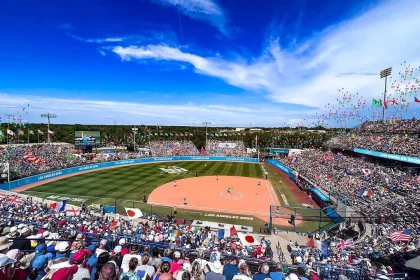
And national teams turning the World Baseball Classic into one of the sport’s most emotionally charged competitions.
Baseball’s modern form developed in the United States during the 19th century, but the game traveled extraordinarily well. Professional and amateur systems took root abroad, sometimes developing cultures every bit as intense as those found in its country of origin.
Today, the World Baseball Softball Confederation oversees the international game, while professional leagues operate across several of the world’s largest sports markets.
And another global catalyst is approaching.
Baseball returns to the Olympic Games at Los Angeles 2028.
For a sport sometimes described through the lens of American tradition, baseball’s future increasingly depends on something much larger:
its global network of local baseball cultures.
By the Numbers
| Indicator | Baseball |
|---|---|
| Modern development | United States, 19th century |
| International governing body | WBSC |
| Major U.S./Canadian league | MLB |
| MLB teams | 30 |
| Major Japanese league | Nippon Professional Baseball |
| Major South Korean league | KBO League |
| Premier national-team event | World Baseball Classic |
| Major youth organization | Little League International |
| NCAA championship | Men’s College World Series |
| Olympic status | Returning at LA28 |
| Olympic venue | Dodger Stadium |
| Global strength | Americas and East Asia particularly strong |
Baseball’s global footprint is not evenly distributed.
That is part of what makes the market interesting.
In some countries, baseball is a niche activity.
In others, it is embedded in national sporting culture.
Japan, South Korea, the Dominican Republic, Venezuela, Cuba, Puerto Rico, Mexico and Chinese Taipei have all developed distinctive baseball ecosystems rather than simply importing the American version.
Baseball became global by becoming local.
Watch Baseball Around the World
Understanding baseball’s market requires looking beyond one league.
Major League Baseball
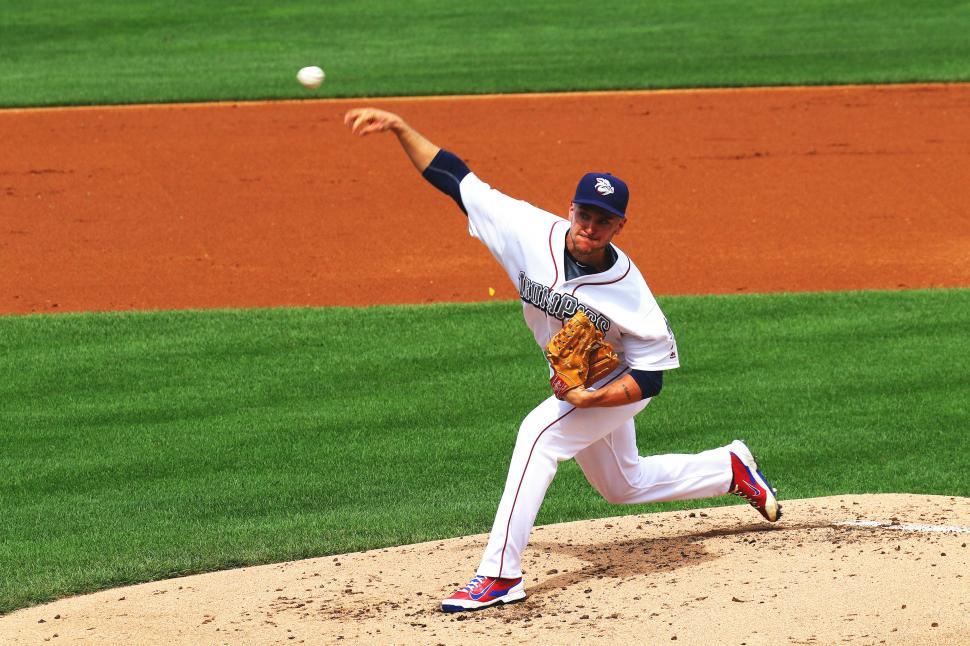
MLB remains the world’s most commercially powerful baseball league and attracts elite players from across the international game.
Nippon Professional Baseball
Japan’s top professional league is one of the strongest baseball competitions outside North America and sits at the center of a deeply established Japanese baseball culture.
KBO League
South Korea’s professional game is known for passionate crowds, distinctive stadium culture and a strong domestic fan base.
World Baseball Classic
National-team baseball creates a different kind of energy from the professional club game, allowing players to represent countries and territories with powerful baseball identities.
WBSC
Follow international rankings, world championships, youth competition and the broader global baseball and softball ecosystem.
NCAA Baseball
College baseball remains a major American development and entertainment platform, culminating each year in the Men’s College World Series.
The Local Field Is Where Baseball Begins
Baseball’s elite infrastructure is enormous.
But the sport usually enters someone’s life somewhere much smaller.
A municipal field.
A Little League diamond.
A school team.
A local club.
A batting cage.
A backyard.
That’s why baseball fits so naturally into the direction we’re building at theGLOBALSPORTSMARKET.com.
A parent reading about baseball may not need another explanation of what a shortstop does.
They may need to know:
Where can my child play?
Is there a youth league nearby?
Where are the local fields?
Are there travel teams?
Baseball camps?
Batting facilities?
Adult leagues?
High-school games?
College games?
Minor-league teams?
Tournaments this weekend?
The global baseball economy ultimately depends on thousands upon thousands of these local entry points.
Without them, there is no next generation of players or fans.
Little League Made Local Baseball International
Few organizations demonstrate baseball’s local-to-global structure better than Little League International.
Founded in Williamsport, Pennsylvania, Little League built a model around community programs that eventually spread internationally.
Its best-known event, the Little League Baseball World Series, brings teams from different parts of the world into the same tournament while maintaining a direct connection to local leagues back home.
That model captures something fundamental about baseball.
The player on international television may still represent a neighborhood league.
Global visibility doesn’t have to replace local identity.
It can amplify it.
Youth Baseball Is Also a Major Economy
Once baseball moves beyond casual participation, the ecosystem can become expensive and highly organized.
Families may spend on:
League Fees • Club Fees • Travel Teams • Tournament Entry • Hotels • Equipment • Uniforms • Batting Instruction • Pitching Instruction • Camps • Showcases
Travel baseball has created a substantial event economy in the United States.
Large tournament complexes can bring hundreds of teams and thousands of families into a community.
Hotels fill.
Restaurants gain customers.
Fields are rented.
Officials work games.
Equipment vendors sell products.
Private instructors gain clients.
That makes youth baseball more than a player-development system.
It is also part of the local sports-tourism economy.
At the same time, cost remains one of baseball’s important challenges.
A glove and ball may be enough to start playing catch.
Elite travel baseball can be something entirely different financially.
Maintaining accessible community baseball alongside increasingly expensive development pathways will remain important to the sport’s long-term health.
College Baseball Connects Development With Community
College baseball occupies an interesting place in the American ecosystem.
It develops professional prospects, but it also creates strong regional sports cultures of its own.
Programs across the Southeast, Texas, California and other baseball-rich areas can draw passionate crowds and build identities extending well beyond player development.
The season culminates in the NCAA Men’s College World Series, staged in Omaha, Nebraska.
Omaha demonstrates exactly how a sports event can become intertwined with a place.
Fans travel.
Hotels fill.
Restaurants benefit.
Sponsors activate.
Families build annual traditions around attending.
The event becomes part tournament, part festival and part tourism engine.
That’s the kind of sports ecosystem we’re interested in.
Not simply:
Who won?
But:
What exists around the game because the game is there?
MLB Is the Top of an International Player Pipeline
Major League Baseball may be based in the United States and Canada, but its player-development system stretches far beyond North America.
The Dominican Republic has become especially important.
MLB organizations operate academies there, scouting and developing players who may enter professional baseball as teenagers.
Venezuela has produced generations of major-league talent.
Puerto Rico has a deep baseball history.
Japan and South Korea have sent established professional stars to MLB.
Players from Cuba, Mexico, Panama, Colombia, Curaçao and other markets have also reached the highest level.
That creates a powerful global feedback loop.
A child watches a player from his country succeed in MLB.
That player becomes a national sports figure.
Interest grows.
Academies and development programs gain attention.
More children enter the game.
The professional league may sit thousands of miles away.
The inspiration is local.
Japan Shows What Happens When Baseball Becomes Its Own Culture
Baseball in Japan is not simply American baseball played overseas.
It has developed its own traditions, development systems, fan culture and sporting importance.
Nippon Professional Baseball operates at the top of the professional structure.
Below that is a deep ecosystem of school and amateur baseball.
The national high-school tournaments at Koshien Stadium are among the most culturally significant youth sporting events in Japan.
Then there is the national team.
Japan won the 2023 World Baseball Classic, defeating the United States in a championship game that ended with Shohei Ohtani striking out Mike Trout.
It was almost impossibly perfect theater: two MLB superstars, club teammates at the time, representing different countries with a world championship on the line.
Japan’s success demonstrates something important about global sports growth.
The strongest international markets don’t merely consume someone else’s sports product.
They create their own baseball traditions.
Korea, the Caribbean and Latin America Add Different Baseball Identities
South Korean baseball offers another model.
The KBO League has built a distinctive professional environment around organized cheering, songs, food and stadium experiences that give attending a game a different rhythm from MLB.
Across the Caribbean, winter baseball creates another important ecosystem.
The Caribbean Series brings leading clubs from regional winter leagues into international competition.
The Dominican Republic, Puerto Rico, Venezuela and Mexico each possess baseball traditions shaped by their own leagues, communities and histories.
For players, those systems can provide development and professional opportunities.
For fans, they create local teams worth caring about.
And for baseball globally, they create something invaluable:
multiple centers of gravity.
The World Baseball Classic Changed International Baseball
Baseball has long had international competition.
The World Baseball Classic gave it something different:
a national-team event featuring many of the world’s biggest professional stars.
That distinction matters.
Professional club baseball asks fans to care about franchises.
The WBC asks them to care about countries and territories.
Japan.
United States.
Dominican Republic.
Puerto Rico.
Venezuela.
Mexico.
Korea.
Chinese Taipei.
And many more.
Flags fill stadiums.
Players speak openly about national pride.
Fans who may never follow the same professional league suddenly share the same tournament.
The 2026 World Baseball Classic brought the event back with a 20-team field and games in Tokyo, San Juan, Houston and Miami.
For baseball’s global future, the WBC may be one of its most important properties because it makes the international structure of the sport impossible to ignore.
Baseball Returns to the Olympics
Baseball has had an inconsistent Olympic history.
It appeared as a demonstration sport before becoming an official medal sport, was later removed from the Olympic program, returned at Tokyo 2020 and was absent from Paris 2024.
Now it is coming back.
Baseball will be played at Los Angeles 2028.
And the setting could hardly be more appropriate.
The competition will be held at Dodger Stadium, one of baseball’s most recognizable venues.
Olympic inclusion gives baseball another opportunity to reach audiences through national-team competition.
But the sport faces a familiar challenge:
How consistently can the world’s best players participate?
The closer Olympic baseball gets to featuring the sport’s biggest stars, the more powerful the event becomes.
LA28 offers an extraordinary stage to demonstrate that baseball isn’t merely America’s pastime.
It is an international game.
The Business of Baseball Extends Far Beyond MLB
Baseball’s commercial ecosystem is enormous.
Professional Baseball
Major leagues generate revenue through:
Media Rights • Tickets • Sponsorship • Premium Hospitality • Licensing • Merchandise • Digital Content
But MLB is only part of the professional market.
Japan, South Korea, Mexico, the Caribbean and other regions support their own professional systems.
Minor League Baseball
Minor League Baseball gives dozens of smaller North American communities professional baseball of their own.
That’s important.
A fan doesn’t necessarily need to live near an MLB city to build a relationship with professional baseball.
Minor-league clubs can become community institutions.
Equipment
Baseball supports a mature equipment market:
Bats • Gloves • Balls • Helmets • Catcher’s Equipment • Uniforms • Footwear • Training Technology
Major companies include Rawlings, Wilson, Louisville Slugger, Marucci and Easton.
Training and Technology
Modern baseball development increasingly uses:
Pitch Tracking • Bat Sensors • Video Analysis • Biomechanics • Ball-Flight Data • Strength Training
Companies such as Rapsodo and HitTrax have helped bring advanced performance data into training environments far below the major-league level.
Tournaments and Travel
Youth baseball creates a substantial travel economy built around tournament complexes, hotels, restaurants, transportation and family spending.
Again, the lesson is the same:
Baseball’s global economy is built from local baseball activity.
Finding Baseball Should Be Easier
Baseball has an enormous amount of fragmented local information.
Leagues have websites.
Clubs have websites.
Tournament operators have schedules.
Municipalities manage fields.
Schools post games.
Colleges sell tickets.
Minor-league teams promote events.
Camps advertise separately.
Batting facilities operate independently.
For a family, player or fan, finding all of it can require far too much searching.
That’s one of the problems the Global Sports Directory can help solve.
Someone discovering baseball through theGLOBALSPORTSMARKET.com should eventually be able to find:
Youth Leagues • Little League Programs • Travel Clubs • Fields • Batting Cages • Training Facilities • Camps • Tournaments • Adult Leagues • High-School Games • College Programs • Minor-League Teams • Professional Events
Think about how useful that becomes when traveling.
You’re visiting another city.
Is there a baseball game tonight?
A minor-league stadium nearby?
A historic ballpark?
A tournament?
A place for your child to train?
A baseball academy?
That’s the bridge between sports information and sports utility.
Global Sports Market Index
| Factor | Score | Global Sports Market View |
| Participation Potential | 9.0 | Deep participation culture in core markets |
| Accessibility | 8.0 | Easy recreational entry but organized baseball requires fields and equipment |
| Global Reach | 9.0 | Major strength across the Americas and East Asia |
| Youth Development | 10.0 | Extensive league, club, school and academy systems |
| Collegiate Ecosystem | 9.5 | Powerful U.S. college infrastructure |
| Professional Opportunity | 10.0 | Multiple major professional systems worldwide |
| International Competition | 9.5 | World Baseball Classic has transformed national-team visibility |
| Media Potential | 9.5 | Strong global professional and international audiences |
| Equipment & Commerce | 10.0 | Mature equipment, apparel, training and technology market |
| Local Discovery Value | 9.5 | Enormous network of fields, leagues, clubs and events |
| Overall | 9.4/10 | Global Sports Powerhouse |
Global Sports Market Verdict
Market Position: Global Sports Powerhouse
Accessibility: Strong
International Reach: Very Strong
Youth Development: Exceptional
Collegiate Ecosystem: Exceptional in the United States
Professional Ecosystem: Exceptional
International Competition: Increasingly Powerful
Commercial Ecosystem: Exceptional
Local Participation Potential: Very High
Discovery Value: High
Baseball’s greatest strength may also be what makes the sport difficult to summarize.
There is no single baseball culture.
There is American baseball.
Japanese baseball.
Korean baseball.
Dominican baseball.
Puerto Rican baseball.
Venezuelan baseball.
Mexican baseball.
Cuban baseball.
Taiwanese baseball.
And countless local versions of the game underneath them.
The sport’s global future doesn’t depend on making all of those cultures look the same.
It depends on allowing them to become even stronger.
The World Baseball Classic brings them together.
LA28 gives them another global stage.
Professional leagues create aspiration.
But baseball continues to regenerate itself in much smaller places:
the neighborhood field
the school team
the academy
the batting cage
the local tournament
the game of catch between a parent and child
Baseball may operate as a multibillion-dollar global sports business.
But its next player can still begin with:
a ball, a glove and someone willing to play catch.
Global Sports Market Intelligence Rating: 9.4/10 — Global Sports Powerhouse
Explore Baseball
World Baseball Softball Confederation
The international governing body and primary resource for international baseball, world rankings, national teams, youth championships and Olympic competition.
Major League Baseball
Follow MLB teams, players, schedules, statistics, tickets and the highest-profile professional baseball competition in the world.
World Baseball Classic
Follow baseball’s premier global national-team tournament and one of the most important international properties in the sport.
Nippon Professional Baseball
The official resource for Japan’s top professional baseball league.
KBO League
Follow professional baseball in South Korea and one of Asia’s strongest baseball markets.
NCAA Baseball
Follow U.S. college baseball, including rankings, schedules and the Men’s College World Series.
Little League International
A major gateway into community youth baseball and softball around the world.
Minor League Baseball
Find professional baseball teams and games in communities throughout North America.
Find Baseball Near You
Baseball is global.
Your baseball experience is local.
As the Global Sports Directory grows on theGLOBALSPORTSMARKET.com, our goal is to help players, parents, coaches and fans find:
Youth Leagues • Little League Programs • Clubs • Travel Teams • Baseball Fields • Batting Cages • Training Facilities • Camps • Tournaments • Adult Leagues • College Games • Minor-League Teams • Professional Events
Maybe your child wants to play for the first time.
Maybe you’re looking for a travel club.
Maybe you want an adult league.
Maybe you’re visiting another city and want to catch a game.
Maybe you need a batting facility.
Maybe there’s a tournament five miles away that you didn’t know existed.
The goal is simple:
Don’t just follow baseball. Find your way into it.
Continue Your Global Sports Discovery Journey
Baseball belongs to a much larger global sports ecosystem.
Continue exploring with these reports from theGLOBALSPORTSMARKET.com:
Field Hockey
Explore another sport where local clubs and youth development systems connect communities to elite international and Olympic competition.
Ice Hockey
Discover how community rinks, youth organizations and development systems feed one of the world’s strongest professional sports ecosystems.
Lacrosse
Explore another North American-rooted sport expanding internationally through youth clubs, colleges, professional leagues and Olympic opportunity.
Why Hurling Matters: Ireland’s Fastest and Most Fascinating Sport
Discover a sport where community clubs, cultural identity and local participation remain at the heart of the entire ecosystem.
Why Sepak Takraw Matters: The World’s Most Spectacular Sport You’ve Probably Never Seen
Explore another culturally rooted sport building international competition and reaching new audiences beyond its traditional home.
Explore more sports at theGLOBALSPORTSMARKET.com.
Our goal isn’t simply to explain the world’s sports.
It’s to help people discover them, understand them, care about them—and ultimately find a way to experience them themselves.
Discover → Understand → Care → Find → Participate.
Published By
theGLOBALSPORTSMARKET.com
A KODA8, LLC Property
Powered by theGLOBALMARKET.ai
Helping sports fans discover, understand and appreciate the incredible world of sports.

Author: Howie
We are building a network of digital resources designed to bring some much-needed order to the internet's most chaotic corners. I don't just collect domains; I build them into authoritative hubs for the topics I’m passionate about.