

Why Soccer Matters: How the World’s Game Became a Global Sporting Language
Global Sports Market Intelligence Report
Sport: Soccer / Association Football
Category: Team Sports
Market Stage: Global Powerhouse
Global Sports Market Intelligence Rating: 10.0 / 10
Olympic Sport: Yes
Global Governing Body: FIFA
One Ball. Two Goals. An Entire World.
Walk through a neighborhood in Buenos Aires and you may find children playing soccer between parked cars.
Travel to Lagos and a patch of dirt can become a football pitch.
In London, Madrid, Munich and Milan, historic stadiums fill with supporters whose relationships with their clubs stretch across generations.
In the United States, soccer fields fill every weekend with youth teams while professional leagues continue expanding.
And every four years, much of the planet turns its attention toward the same competition.
The FIFA World Cup.
There may be no better example of sport becoming a global language.
Soccer—known formally as association football and simply as football throughout most of the world—combines an extraordinarily simple concept with almost unlimited tactical and technical complexity.
Put a ball on the ground.
Create two goals.
Find some players.
Start playing.
That simplicity helped soccer travel farther than perhaps any organized sport in history.
But accessibility alone does not explain what soccer has become.
Today, the sport supports an enormous international ecosystem of clubs, leagues, national federations, stadiums, academies, coaches, referees, broadcasters, sponsors, apparel companies, technology providers, agents, data companies, media organizations and billions of supporters.
Soccer isn’t simply one of the world’s biggest sports markets.
It is one of the world’s great cultural marketplaces.
Did You Know?
FIFA has 211 member associations representing countries and territories across six continental confederations, illustrating the extraordinary geographic reach of organized soccer.
The sport also exists at almost every imaginable competitive level—from informal neighborhood games and school programs to professional clubs worth billions of dollars and national teams competing for the World Cup.
Few sports provide a clearer example of how a simple game can grow into an interconnected global industry.
By the Numbers
| Soccer Snapshot | Intelligence |
|---|---|
| Players on the Field | 11 per team |
| Match Length | 90 minutes plus stoppage time |
| Primary Objective | Score more goals than the opponent |
| Global Governing Body | FIFA |
| FIFA Member Associations | 211 |
| Continental Confederations | 6 |
| Olympic Sport | Yes |
| Modern Rules Origin | England, 1863 |
| Largest International Competition | FIFA World Cup |
| Market Position | Global Powerhouse |
Watch Soccer in Action
For someone discovering soccer for the first time, watching elite competition is one of the fastest ways to understand why the sport commands such an enormous following.
Start with these official resources:
The international governing body provides World Cup coverage, international competitions, rankings, development information and video from across world football.
UEFA Champions League
https://www.uefa.com/uefachampionsleague/
Europe’s premier club competition brings together many of the world’s most recognized clubs and players. UEFA’s official site includes fixtures, results, competition information and highlights.
Premier League
https://www.premierleague.com/
England’s top professional league is one of the most internationally recognized domestic soccer competitions.
Major League Soccer
https://www.mlssoccer.com/
MLS provides a useful window into the continued development of professional soccer across the United States and Canada.
National Women’s Soccer League
https://www.nwslsoccer.com/
The NWSL showcases elite women’s professional soccer in the United States and is part of the rapidly developing global women’s soccer marketplace.
What Is Soccer?
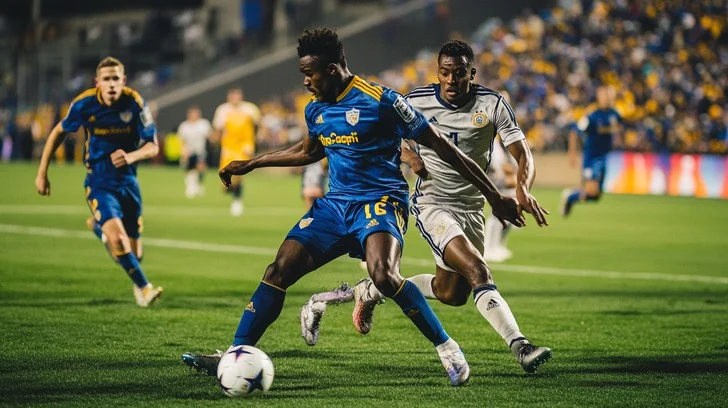
Soccer is played between two teams attempting to move a spherical ball into the opposing team’s goal.
Each team normally fields 11 players, including one goalkeeper.
Outfield players primarily control and advance the ball using their feet, although they may legally use other parts of the body except their hands and arms. The goalkeeper receives special handling privileges within the goalkeeper’s own penalty area.
A standard match consists of two 45-minute halves, with additional stoppage time determined by the referee.
At first glance, the objective could hardly be simpler:
Score more goals than the other team.
Yet within that simple objective exists remarkable complexity.
Teams must constantly decide when to attack, defend, press, retreat, pass, dribble, cross, shoot, overlap, counterattack and control possession.
Space becomes a resource.
Time becomes a resource.
Movement without the ball becomes nearly as important as movement with it.
That combination of simplicity and strategic depth is one reason someone can understand the basic objective within minutes and spend a lifetime learning the game.
For the official Laws of the Game, visit the International Football Association Board (IFAB):
Understanding the Positions
Soccer positions can change considerably depending on a team’s tactical system, but most players fall into four broad groups.
Goalkeeper
The goalkeeper protects the goal and is the only player permitted to intentionally handle the ball within the team’s own penalty area.
Modern goalkeepers increasingly participate in possession and passing as well as shot-stopping.
Defenders
Defenders protect the area around their goal and attempt to stop opposing attacks.
Common roles include:
- Center back
- Fullback
- Wingback
Midfielders
Midfielders often connect defense and attack.
Depending on their role, they may specialize in defending, controlling possession, creating scoring opportunities or making attacking runs.
Common roles include:
- Defensive midfielder
- Central midfielder
- Attacking midfielder
- Wide midfielder
Forwards
Forwards operate primarily in attacking areas and are generally responsible for creating and finishing scoring opportunities.
Roles can include:
- Center forward
- Striker
- Winger
- Second striker
The beauty of soccer tactics is that these responsibilities are constantly evolving.
Why People Love Playing Soccer
Soccer has one enormous structural advantage over many sports:
You don’t need much to begin.
A ball and some open space can be enough.
Goals can be constructed from cones, bags, shoes, sticks or almost anything else available.
That low barrier to entry has allowed soccer to develop in communities regardless of wealth or infrastructure.
But accessibility only gets people started.
The game keeps them playing because it rewards so many different abilities.
A great player might possess exceptional:
- Speed
- Endurance
- Balance
- Ball control
- Passing
- Vision
- Creativity
- Positioning
- Tactical intelligence
- Finishing ability
- Leadership
And soccer creates moments that players remember.
The perfectly weighted pass.
The last-second tackle.
The impossible save.
The curling free kick.
The goal scored with seconds remaining.
Soccer allows individuals to express themselves while remaining completely dependent on the team around them.
How Soccer Players Become Great
Elite soccer development rarely comes from one skill.
Players gradually build a collection of physical, technical, tactical and psychological abilities.
Technical Development
Players spend years developing:
- First touch
- Passing accuracy
- Dribbling
- Shooting
- Crossing
- Heading
- Receiving under pressure
- Ball protection
Tactical Development
As competition increases, understanding the game becomes increasingly important.
Players learn how to:
- Recognize space
- Anticipate movement
- Maintain team shape
- Press opponents
- Defend collectively
- Transition between attack and defense
- Create numerical advantages
- Make faster decisions
Physical Development
Professional soccer demands repeated bursts of acceleration, changes of direction and sustained movement across a long match.
Training commonly develops:
- Aerobic endurance
- Sprint speed
- Strength
- Mobility
- Agility
- Recovery
Development Pathways
Pathways vary enormously around the world.
Players may develop through:
- Community clubs
- School teams
- Youth academies
- Federation development programs
- Private academies
- College soccer
- Professional club academies
- Semi-professional clubs
- Reserve teams
FIFA’s member associations are responsible for football development within their territories, including competitions and grassroots programs, while FIFA supports associations through international development initiatives.
From 1863 to the World’s Game
Humans played various forms of football for centuries, but the development of modern association football is closely connected with England.
In 1863, The Football Association was formed and helped establish standardized rules that distinguished association football from other football codes.
The Football Association
https://www.thefa.com/
International organization followed.
FIFA — Fédération Internationale de Football Association was founded in 1904.
From there, international competition accelerated.
The first men’s FIFA World Cup was held in 1930.
Women’s international football eventually developed its own global championship structure, with the first FIFA Women’s World Cup held in 1991.
Today, FIFA’s network contains 211 member associations and six continental confederations.
What began as a codified game in Britain became something dramatically larger:
a sport embedded within the cultural identity of communities across the world.
Global Growth Analysis
Calling soccer a “growing sport” does not fully describe its position.
Soccer is already globally established.
The more interesting question is:
Where can the world’s biggest sport still grow?
The answer is almost everywhere—but in different ways.
North America
Soccer continues building commercial and cultural momentum through youth participation, professional league development, international club interest and major international competitions.
Major League Soccer
https://www.mlssoccer.com/
U.S. Soccer Federation
https://www.ussoccer.com/
Canada Soccer
https://canadasoccer.com/
Mexican Football Federation
https://fmf.mx/
Europe
Europe contains many of the world’s wealthiest clubs, leagues and competitions.
The Union of European Football Associations (UEFA) governs the continental game.
The UEFA Champions League represents one of club soccer’s most important commercial and sporting properties.
https://www.uefa.com/uefachampionsleague/
South America
Few regions possess a deeper football culture.
The South American Football Confederation (CONMEBOL) governs continental competition.
Its competitions include the historic Copa América and Copa Libertadores.
Africa
Football occupies an enormous cultural position throughout Africa.
The Confederation of African Football (CAF) oversees continental competition and development.
The Africa Cup of Nations provides one of the continent’s major international sporting showcases.
Asia
Asia represents an enormous long-term soccer marketplace because of its population, growing professional leagues, investment, sponsorship opportunities and expanding fan bases.
The Asian Football Confederation (AFC) governs the sport across the region.
Oceania
The Oceania Football Confederation (OFC) supports competition and football development across the Pacific region.
https://www.oceaniafootball.com/
Together, these six confederations and FIFA’s 211 member associations create one of the most geographically extensive governance systems in international sport.
Women’s Soccer: One of the Market’s Biggest Growth Stories
Women’s soccer deserves more than a footnote inside the broader football story.
It represents one of the most important expansion opportunities in global sport.
Professional leagues are strengthening.
International tournaments are attracting larger audiences.
Major clubs are investing more heavily in women’s teams.
Sponsors are discovering new athletes and audiences.
And younger players increasingly have visible professional pathways that previous generations did not have.
Useful resources include:
FIFA Women’s Football
https://www.fifa.com/en/womens-football
National Women’s Soccer League
https://www.nwslsoccer.com/
UEFA Women’s Football
https://www.uefa.com/womenschampionsleague/
The continued professionalization of women’s soccer creates opportunities not only for athletes, but also for coaches, executives, broadcasters, sponsors, equipment manufacturers, data providers, venues and investors.
The Business of Soccer
This is where soccer becomes particularly fascinating from a Global Sports Market perspective.
The game on the field is only the center of a much larger economic ecosystem.
Governing Bodies and Confederations
FIFA — https://www.fifa.com/
The global governing organization connects 211 member associations and oversees major international competitions and development programs.
UEFA — https://www.uefa.com/
Governs European football and operates major properties including the UEFA Champions League and European Championship.
CONMEBOL — https://www.conmebol.com/
Governs South American football and organizes competitions including Copa América and Copa Libertadores.
CONCACAF — https://www.concacaf.com/
Oversees football across North America, Central America and the Caribbean.
CAF — https://www.cafonline.com/
Governs African football and competitions including the Africa Cup of Nations.
AFC — https://www.the-afc.com/
Oversees football throughout Asia.
OFC — https://www.oceaniafootball.com/
Supports football competition and development across Oceania.
Professional League Ecosystem
Professional leagues turn soccer into a year-round entertainment business.
Important examples include:
Premier League — https://www.premierleague.com/
England’s top domestic competition and one of the world’s most internationally recognized sports leagues.
LaLiga — https://www.laliga.com/
Home to Spain’s top professional clubs and one of European football’s major commercial properties.
Bundesliga — https://www.bundesliga.com/
Germany’s leading professional league.
Serie A — https://www.legaseriea.it/
Italy’s top professional football competition.
Ligue 1 — https://ligue1.com/
France’s leading professional league.
Major League Soccer — https://www.mlssoccer.com/
The leading men’s professional league across the United States and Canada.
National Women’s Soccer League — https://www.nwslsoccer.com/
A major professional women’s league in the United States.
These are only a fraction of the professional competitions operating worldwide.
Equipment and Apparel
Soccer also powers a huge sporting-goods marketplace.
Players require products including:
- Soccer boots
- Match balls
- Training balls
- Jerseys
- Shorts
- Socks
- Shin guards
- Goalkeeper gloves
- Goals
- Training cones
- Rebounders
- Coaching equipment
Major companies include:
adidas — https://www.adidas.com/
A historic force in soccer equipment, footwear, teamwear and match-ball development.
Nike Soccer — https://www.nike.com/soccer
Nike’s soccer business spans footwear, national-team and club apparel, equipment and some of the world’s best-known athletes. Its official soccer platform currently features boots, national teams, clubs, athletes and equipment.
PUMA Football — https://www.puma.com/
A major global manufacturer of soccer boots, apparel and team equipment.
Umbro — https://www.umbro.com/
A football-focused brand with deep historical roots in kits and equipment.
Mizuno — https://www.mizuno.com/
A major Japanese sporting-goods company with an established soccer footwear business.
The commercial opportunity extends far beyond professional athletes. Millions of recreational and youth players need equipment, while supporters create an enormous market for licensed jerseys, apparel and merchandise.
The Media, Data and Technology Market
Modern soccer increasingly operates at the intersection of sport and technology.
Professional organizations use technology for:
- Player tracking
- Performance analysis
- Recruitment
- Scouting
- Injury prevention
- Tactical analysis
- Video review
- Fan engagement
- Ticketing
- Streaming
- Sports betting data
- Stadium operations
One of the most visible changes has been Video Assistant Referee (VAR) technology.
Goal-line technology, wearable tracking devices, optical tracking, advanced statistics and artificial intelligence are also changing how teams evaluate performance.
This creates another layer of the soccer economy.
The future isn’t only about selling tickets and jerseys.
It is increasingly about data.
Soccer’s Major Global Competitions
The soccer calendar contains an extraordinary number of valuable sports properties.
FIFA World Cup
https://www.fifa.com/en/tournaments/mens/worldcup
The men’s World Cup is the sport’s flagship national-team competition.
FIFA Women’s World Cup
https://www.fifa.com/en/tournaments/womens/womensworldcup
The premier global championship in women’s international soccer.
UEFA Champions League
https://www.uefa.com/uefachampionsleague/
Europe’s leading club championship and one of the world’s most recognizable annual sporting competitions.
Copa América
One of international soccer’s oldest and most prestigious continental championships.
Africa Cup of Nations
https://www.cafonline.com/afcon/
Africa’s flagship men’s national-team competition.
AFC Asian Cup
Asia’s premier men’s national-team championship.
CONCACAF Gold Cup
https://www.concacaf.com/gold-cup/
The leading men’s national-team championship for the CONCACAF region.
Olympic Football
https://www.olympics.com/en/sports/football/
Soccer has a long Olympic history and provides another global showcase for the sport.
What Is the Future of Soccer?
For a sport already operating at enormous scale, the next phase of growth will not come from one single source.
It will come from multiple markets expanding simultaneously.
Watch:
Women’s Soccer
Increasing professionalization could create new leagues, franchises, sponsorship opportunities, media properties and athlete brands.
North American Growth
The United States, Canada and Mexico continue developing as soccer markets, creating opportunities across professional competition, youth participation, facilities, media and sponsorship.
Technology
AI, tracking systems, analytics and automated video production could transform scouting, coaching and fan experiences.
Direct-to-Consumer Media
Streaming allows leagues and clubs to reach supporters far beyond their home markets.
Global Club Brands
The largest clubs increasingly behave like international entertainment brands rather than purely local sporting organizations.
Grassroots Development
Perhaps most importantly, soccer can continue expanding because its fundamental product remains remarkably accessible.
You still don’t need a billion-dollar stadium to discover the game.
You need a ball.
Global Sports Market Index
The Global Sports Market Index evaluates a sport not simply by popularity, but by the strength and future potential of the entire ecosystem surrounding it.
| Market Factor | Score | Global Sports Market View |
| Global Popularity | 10/10 | Soccer possesses extraordinary international recognition and deeply established supporter cultures across multiple continents. |
| Participation Accessibility | 10/10 | A ball and open space can be enough to begin playing, giving soccer one of the lowest fundamental barriers to entry in organized sport. |
| Geographic Reach | 10/10 | FIFA’s 211 member associations and six confederations demonstrate an exceptional global organizational footprint. |
| Professional Ecosystem | 10/10 | Professional clubs, leagues, national teams, academies, coaches, officials, agents and supporting companies form a vast employment and commercial network. |
| Media & Broadcasting | 10/10 | Domestic leagues, continental competitions and international tournaments create soccer content throughout virtually the entire calendar. |
| Sponsorship & Commercial Value | 10/10 | Soccer provides global sponsorship inventory across clubs, leagues, athletes, national teams, stadiums and major tournaments. |
| Equipment & Retail Market | 10/10 | Footwear, balls, apparel, training products, licensed merchandise and supporter gear create a worldwide retail ecosystem. |
| Youth Development | 10/10 | Grassroots programs, schools, academies, community clubs and federation systems create extensive entry points into the sport. |
| Women’s Sports Growth | 10/10 | Women’s soccer represents one of the most significant expansion opportunities within the international sports economy. |
| Long-Term Market Potential | 10/10 | Growth in technology, women’s football, media distribution and developing markets adds new opportunities to an already dominant sport. |
Global Sports Market Intelligence Rating: 10.0 / 10 — Global Sports Powerhouse
Soccer represents one of the clearest benchmarks for what a fully developed global sports marketplace can become.
The sport connects grassroots participation with elite competition, local identity with international entertainment, and simple recreational play with an enormous commercial ecosystem.
Very few sports can match that combination.
Final Thoughts
Perhaps soccer’s greatest achievement is not the World Cup.
It isn’t the enormous stadiums.
It isn’t the billion-dollar clubs, global television contracts or famous players.
It’s that the same basic game works almost anywhere.
A child can discover soccer with a ball in a backyard.
Friends can create a match on a beach.
A community can build a club.
A country can build a national team.
And billions of people can understand exactly what is happening when a player breaks free toward goal.
That is extraordinary.
The business of soccer may have become enormously sophisticated, but the sport itself remains beautifully simple.
One ball. Two goals. Play.
And perhaps that’s why the world never stopped playing it.
Global Sports Market Verdict
Market Position: Global Powerhouse
Accessibility: Exceptional
International Reach: Exceptional
Commercial Ecosystem: Exceptional
Growth Opportunity: Strong despite extraordinary existing scale
Discovery Value: Essential
The Verdict
If theGLOBALSPORTSMARKET.com exists to help people understand the extraordinary scale and diversity of the world’s sports economy, soccer is one of the clearest places to begin.
It demonstrates what can happen when accessibility, culture, competition, media, business and community all develop around the same game.
Soccer isn’t merely popular.
It is global sports infrastructure.
FAQ – Soccer Explained
1. How many countries play soccer?
FIFA has 211 member associations across 6 continental confederations, making soccer one of the most geographically extensive sports in the world.
2. Is soccer an Olympic sport?
Yes, soccer has a long Olympic history and is played at both the men’s and women’s Olympics.
3. What does my kid need to start soccer?
A ball and open space can be enough to begin. Goals can be made from cones, bags, or shoes according to the article.
4. What is the Intelligence Rating for soccer?
10.0 / 10 – Global Sports Powerhouse. It’s rated exceptional for popularity, accessibility, geographic reach, and commercial ecosystem.
5. How long is a soccer game?
90 minutes plus stoppage time – two 45-minute halves.
6. How much does it cost to start?
The article says soccer has one of the lowest barriers to entry in organized sport. A ball and open space is enough, making it accessible regardless of wealth.
7. Why does the world love soccer?
Because the same basic game works anywhere – a child in a backyard, friends on a beach, or billions watching the World Cup. One ball. Two goals. Play.
Explore the Sport
Want to go deeper? These official resources provide direct entry points into the worldwide soccer ecosystem.
FIFA
The global governing organization for association football and the starting point for international competitions, member associations, rankings, development programs and World Cup information. FIFA currently recognizes 211 member associations across six continental confederations.
International Football Association Board — IFAB
The authoritative destination for the Laws of the Game. If you want to understand the actual rules governing soccer, start here.
UEFA
The governing organization for European football and home to competitions including the Champions League and European Championship.
CONMEBOL
The governing body for South American football and a gateway to Copa América, Copa Libertadores and football throughout the continent.
CONCACAF
The continental governing body for North America, Central America and the Caribbean.
Confederation of African Football
The official resource for African continental competitions, member associations and football development.
Asian Football Confederation
The official gateway to football across Asia, including national-team and club competitions.
Oceania Football Confederation
https://www.oceaniafootball.com/
The governing organization supporting football throughout Oceania.
U.S. Soccer
The national governing body for soccer in the United States and a useful resource for national teams, development and the American soccer ecosystem.
Olympics — Football
https://www.olympics.com/en/sports/football/
Official Olympic information covering soccer’s place within the Olympic Games.
Continue Your Global Sports Discovery Journey
Soccer is only one part of an enormous family of sports built around movement, teamwork, creativity and controlling a ball.
Continue exploring:
Field Hockey Explained: Why Millions Around the World Love the Game
https://theglobalsportsmarket.com/ball-and-field-sports/2026/field-hockey-explained-why-millions-around-the-world-love-the-game/
Discover Futsal: The Indoor Game That Created Football’s Greatest Stars
https://theglobalsportsmarket.com/court-sports/2026/discover-futsal-the-indoor-game-that-created-footballs-greatest-stars/
Explore more Global Sports Market Intelligence Reports at:
https://theglobalsportsmarket.com/
Every sport has a story.
Every sport has a community.
And every sport creates a market worth understanding.
Discover the World’s Sports
Are you a player, coach, club administrator, league organizer, governing body, equipment manufacturer, sports technology company or simply someone who loves discovering new sports?
theGLOBALSPORTSMARKET.com is building a global sports intelligence and discovery platform designed to help people understand the organizations, competitions, businesses and communities behind the world’s sports.
Explore another sport.
Discover another organization.
Find another part of the global sports economy you didn’t know existed.
Published By theGLOBALSPORTSMARKET.com
A KODA8, LLC Property
Powered by theGLOBALMARKET.ai
Helping sports fans discover, understand and appreciate the incredible world of sports.

Author: theHowie
We are building a network of digital resources designed to bring some much-needed order to the internet's most chaotic corners. I don't just collect domains; I build them into authoritative hubs for the topics I’m passionate about.