
Alpine Skiing
The Sport
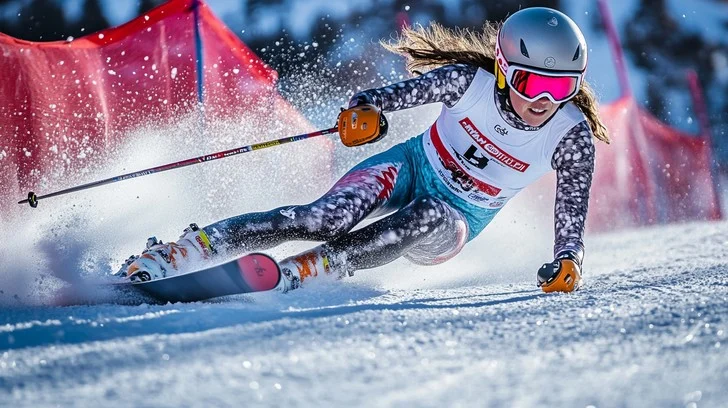
Alpine skiing is a winter sport in which athletes descend snow-covered slopes at speed while navigating a series of gates or racing against time. Events test technical precision, edge control, balance, power generation, and high-speed decision-making. Unlike endurance-based Nordic disciplines, alpine skiing emphasizes gravity-assisted descent, rapid directional changes, aerodynamic positioning, and risk management under variable terrain and weather conditions.
The sport is structured across several competitive formats: Slalom (SL), Giant Slalom (GS), Super-G (SG), Downhill (DH), and Alpine Combined. Slalom and Giant Slalom focus on tighter turns and technical gate navigation, while Super-G and Downhill prioritize speed and line selection. Alpine Combined merges technical and speed elements. Youth development programs typically begin with foundational skiing skills before introducing formal gate racing.
Alpine skiing is governed internationally by the International Ski and Snowboard Federation (FIS) and is a central discipline of the Winter Olympic Games. The Milano Cortina 2026 Winter Olympics increase global visibility and participation interest. Participation remains strongest in Europe, North America, and parts of Asia, particularly in nations with established mountain infrastructure such as Austria, Switzerland, Italy, France, Norway, Canada, and the United States.
From 2025–2026, alpine skiing faces both opportunity and structural challenge. Continued youth engagement in established ski nations contrasts with climate variability and snow reliability concerns in lower-altitude regions. Investment in artificial snowmaking, slope technology, and indoor training facilities continues to evolve. At elite levels, performance analysis incorporates biomechanics, video breakdown, aerodynamic testing, and equipment optimization.
Technology adoption includes wearable motion tracking, high-speed video capture for turn analysis, force measurement systems embedded in training skis, and GPS-based performance tracking. Safety protocols, helmet standards, and binding release technologies remain central to injury mitigation efforts.
How We Can Help
theglobalsportsmarket.com provides structured guidance for athletes, families, coaches, and stakeholders navigating alpine skiing pathways. The platform clarifies the distinction between recreational skiing and competitive alpine racing, outlines long-term athlete development models, and explains federation-based competition structures.
Support includes education on equipment compliance, helmet standards, binding safety systems, and age-appropriate competition progression. The platform also provides awareness of modern performance tools such as biomechanical analysis, course inspection strategy, and load management in high-volume training environments.
Community-based discovery of verified ski clubs, race programs, and development teams is supported through Meet:
https://meet.theglobalsportsmarket.com
This enables families to evaluate structured alpine programs aligned with safety, certification, and long-term athlete progression.
Governing Organizations
International Ski and Snowboard Federation (FIS) – https://www.fis-ski.com
U.S. Ski & Snowboard – https://usskiandsnowboard.org
Alpine Canada – https://alpinecanada.org
Austrian Ski Federation (ÖSV) – https://www.oesv.at
Swiss-Ski – https://www.swiss-ski.ch
Equipment Needed
Core Equipment (Youth → Pro)
Skis (Race and All-Mountain): Rossignol – https://www.rossignol.com
Atomic – https://www.atomic.com
Head – https://www.head.com
Bindings: Must comply with ISO release standards and federation specifications
Boots: Lange – https://www.lange-boots.com
Tecnica – https://www.tecnica-group.com
Helmets and Goggles: Must meet FIS and national federation safety standards
Protective Gear: Back protectors and shin guards for slalom competition
Safety & Certification
Helmets used in sanctioned competition must meet FIS and national governing body certification standards. Binding release settings must be calibrated according to athlete specifications and safety guidelines. Youth competition categories are structured by age classification and skill progression.
2025–2026 Technology Trends
Wearable motion tracking systems for turn analysis
High-speed video review platforms
Aerodynamic suit and equipment optimization
Force plate testing integrated into ski training environments
Major Global Events
Professional / Elite
FIS Alpine Ski World Cup – https://www.fis-ski.com
FIS Alpine World Ski Championships – https://www.fis-ski.com
Winter Olympic Games – https://www.olympics.com
Amateur & Youth
FIS Junior World Ski Championships – https://www.fis-ski.com
National Junior Championships organized by U.S. Ski & Snowboard – https://usskiandsnowboard.org
National and regional youth race series governed by national federations
Local Amateur Clubs
Finding the Right Alpine Ski Program
Competitive alpine skiing typically begins through local ski clubs affiliated with national governing bodies. Programs range from entry-level race development teams to high-performance academies operating at national and international levels.
Families evaluating alpine ski clubs should confirm:
• Affiliation with a recognized national federation (e.g., U.S. Ski & Snowboard, Alpine Canada)
• Certified coaching credentials and continuing education compliance
• Structured age-based development pathways
• Written safety and risk management protocols
• Clear communication regarding seasonal training volume and travel commitments
• Transparent cost structures including lift tickets, coaching fees, equipment requirements, and travel expenses
Development Pathway Considerations
Introductory Race Programs
Focus on skill refinement, balance, and confidence-building in controlled environments.
Regional Competitive Teams
Increased gate training frequency, participation in sanctioned races, and greater seasonal commitment.
High-Performance / Academy Programs
Structured year-round training, dryland conditioning, and international competition opportunities. Families should evaluate academic integration and long-term athlete sustainability.
Red Flags to Avoid
• Programs lacking national federation affiliation
• No written safety or injury management protocols
• Excessive competition schedules for young athletes
• Pressure toward early specialization without foundational development
• Unclear fee breakdowns or equipment requirements
Official Governing Body Club Finders
U.S. Ski & Snowboard – Club Finder – https://usskiandsnowboard.org
Alpine Canada – Club Directory – https://alpinecanada.org
FIS Member Associations – https://www.fis-ski.com
Youth & Competitive Directories
Families researching competitive tiers and results may use recognized ranking and race tracking platforms:
FIS Athlete & Results Database – https://www.fis-ski.com
US Ski & Snowboard Rankings – https://usskiandsnowboard.org
Live-Timing Platforms (regional race tracking systems commonly used in sanctioned events)
These tools provide competition visibility but should not replace direct evaluation of coaching quality, safety compliance, and athlete development philosophy.
Community-Based Discovery
Structured community discovery and program evaluation can also be supported through:
Meet – https://meet.theglobalsportsmarket.com
Careful evaluation of local alpine ski clubs remains the most important factor in ensuring safe participation, sustainable development, and alignment with long-term athletic goals.