



Latest Cricket News
Cricket
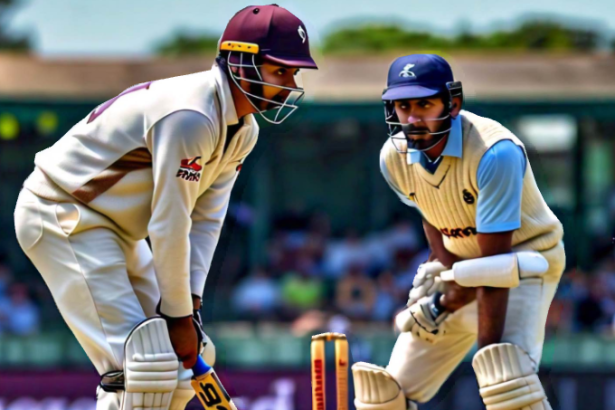
Cricket is a bat-and-ball field sport played between two teams of eleven players on an oval field with a central pitch. The objective is to score runs by striking the ball and running between wickets while the fielding team attempts to dismiss batters through defined methods such as bowled, caught, or run out. The sport combines technical batting, precision bowling, fielding coordination, and strategic captaincy.
Core physical demands vary by format. Batters require hand-eye coordination, footwork, balance, and concentration. Bowlers rely on repeatable biomechanics, endurance, and tactical variation. Fielders must demonstrate agility, acceleration, and throwing accuracy. Longer formats demand sustained concentration over extended periods, while shorter formats require explosive execution.
Cricket is structured across multiple competitive formats:
• Test Cricket (multi-day format)
• One Day Internationals (50-over format)
• Twenty20 (T20) format
• Youth and club-level limited-overs formats
The T20 format has significantly accelerated global participation due to its shorter duration and spectator appeal. Women’s cricket continues to expand internationally with growing domestic leagues and World Cup visibility.
Cricket is governed globally by the International Cricket Council (ICC) and has strong participation bases in South Asia, the United Kingdom, Australia, New Zealand, South Africa, and the Caribbean. Growth markets include the United States and parts of Europe, driven by diaspora communities and new professional league structures.
From 2025–2026, participation growth is strongest in T20 leagues and youth development academies. Technology adoption includes ball-tracking systems, decision review systems (DRS), wearable workload monitoring for bowlers, and data-driven match analytics.
Section 2: Contents
Cricket
The Sport
How We Can Help
Governing Organizations
Equipment Needed
Major Global Events
Local Amateur Clubs
Section 3: How We Can Help
theglobalsportsmarket.com provides structured guidance for athletes, families, and community participants navigating cricket participation pathways.
The platform clarifies differences between recreational club cricket and sanctioned competitive leagues, outlines youth development progression models, and explains equipment compliance standards and safety regulations.
Support includes awareness of workload management for young bowlers, concussion protocols, and age-based competition structures.
Community-based discovery of verified cricket clubs and structured development programs is supported through Meet:
https://meet.theglobalsportsmarket.com
Section 4: Governing Organizations
International Cricket Council (ICC) – https://www.icc-cricket.com
USA Cricket – https://www.usacricket.org
England and Wales Cricket Board (ECB) – https://www.ecb.co.uk
Cricket Australia – https://www.cricket.com.au
Board of Control for Cricket in India (BCCI) – https://www.bcci.tv
Section 5: Equipment Needed
Core Equipment (Youth → Pro)
Cricket Bat compliant with ICC size and material regulations
Cricket Ball (red, white, or pink depending on format)
Batting Pads and Gloves
Helmet meeting recognized safety standards
Abdominal guard (protective equipment)
Cricket Shoes appropriate for pitch conditions
Safety & Certification
Helmets must meet recognized impact protection standards. Youth competitions often enforce bowling workload limits to prevent overuse injuries. Organized clubs should operate under national governing body sanctioning with structured safety protocols.
2025–2026 Technology Trends
Ball-tracking and decision review systems (DRS)
Wearable workload monitoring for bowlers
High-speed video analysis for batting technique
Data analytics platforms for match performance
Section 6: Major Global Events
Professional / Elite
ICC Cricket World Cup – https://www.icc-cricket.com
ICC T20 World Cup – https://www.icc-cricket.com
ICC World Test Championship – https://www.icc-cricket.com
Indian Premier League (IPL) – https://www.iplt20.com
Amateur & Youth
ICC Under-19 Cricket World Cup – https://www.icc-cricket.com
National youth championships governed by respective cricket boards
Section 7: Local Amateur Clubs
How to Identify Legitimate Programs
Cricket participation typically begins at the local club level affiliated with national or regional governing bodies. Families and athletes should confirm:
• Affiliation with a recognized cricket board
• Certified coaching credentials
• Structured youth development programs
• Defined bowling workload policies
• Written safety and concussion protocols
• Transparent membership and league fee structures
Development Pathway Explanation
Recreational Club Cricket
Community-based leagues emphasizing skill development and match play.
Competitive League Structure
Regional and state-level competitions governed by recognized boards.
Youth Development Academies
Structured training environments with age-based progression models.
Elite Pathway
National youth squads, professional domestic leagues, and international competition eligibility.
Seasonal Commitment Expectations
Cricket seasons vary by climate; indoor training facilities may support year-round development.
Cost Transparency Expectations
Equipment costs, club dues, match fees, and travel expenses should be clearly disclosed.
Academic Balance Considerations
Youth competitive programs should maintain scheduling that supports academic performance.
Red Flags to Avoid
• Clubs not affiliated with a recognized governing body
• Absence of certified coaching oversight
• No defined workload management for young bowlers
• Over-promising professional exposure
• Unclear financial obligations
Official Governing Body Club Finders
USA Cricket – Club Directory – https://www.usacricket.org
England and Wales Cricket Board – Club Finder – https://www.ecb.co.uk
ICC Member Associations – https://www.icc-cricket.com
Youth & Competitive Directories
Participants researching rankings and competition structures may consult:
ICC Rankings – https://www.icc-cricket.com
National board event listings
Regional league databases affiliated with recognized cricket boards
These resources provide competition visibility but should not replace evaluation of coaching structure, safety compliance, and long-term athlete development planning.
Community-Based Discovery
Structured local program discovery and comparison can also be supported through:
https://meet.theglobalsportsmarket.com
Careful evaluation of local amateur cricket clubs remains central to safe participation, structured development, and sustainable progression in the sport.